Restaurant supply chain management isn’t just about ordering—it’s a dynamic system that keeps your kitchen humming, cuts waste, and safeguards your profits. When you treat sourcing, forecasting, and vendor relations as interconnected moves, you end up with lean kitchens and predictable menus that guests love.
Why Restaurant Supply Chain Management Matters
Bringing sourcing, demand forecasting, and supplier relationships into alignment creates a rhythm in your back-of-house operations. Picture six gears turning in harmony—each one powers the next and prevents costly hiccups.
- Waste Reduction through spot-on ordering
- Lower Food Costs by negotiating bulk deals
- Menu Consistency so guests always find their favorites
- Vendor Reliability for better quality and fewer surprises
Partnering with a local farm, for instance, can shrink lead times by 30% while boosting ingredient freshness. And thanks to real-time inventory data in your POS, you’ll dodge stockouts when service hits its peak. Suddenly, raw numbers turn into clear-cut actions.
Using TackOn Table’s mobile POS, easy setup, multi-location control, and all-in-one simplicity, you’ll tackle each step with ease.
Six Key Steps
- Sourcing Raw Materials Smartly
- Forecasting Demand With POS Data
- Managing Vendors As Long-Term Partners
- Coordinating Deliveries And Logistics
- Controlling Inventory With Real-Time Alerts
- Reviewing Performance Through KPIs
Overview Of Supply Chain Components
To see how each part fits, here’s a quick glance:
| Component | Role In Operations |
|---|---|
| Sourcing | Identifies quality ingredients at best prices |
| Forecasting | Predicts demand to minimize overstock and stockouts |
| Vendor Management | Builds reliable, long-term partnerships |
| Logistics | Schedules deliveries to match prep and service |
| Inventory Control | Tracks stock levels in real time |
| Continuous Review | Analyzes KPIs to refine processes |
This snapshot ties each element together and sets the stage for deeper workflows.
For a deeper dive, check our solutions guide to see how TackOn Table simplifies every step.
You’ll master these core components before moving on to detailed SOPs, ready-to-use templates, and vendor scorecards. Next up: step-by-step routines that turn strategy into daily practice. Let’s get started!
Understanding Key Supply Chain Concepts
In restaurant supply chain management, predicting demand can feel a lot like checking the weather. You study past patterns, factor in upcoming events, then place orders before stock runs low. This familiar analogy lays the groundwork for smarter ordering tactics.
For instance, a food truck owner might look at last week’s lunch numbers to decide how many wraps to prep. Scale that up to multiple locations, and the math grows more complex. Yet, the underlying principle stays the same: accurate forecasting.
Demand Forecasting Analogy
- Forecast accuracy cuts waste by 20% when you tap into POS data.
- Just-in-time ordering lets you sync prep with busy service windows.
- Historical trends guide both order size and timing.
Think of buffer stock as your backup umbrella on a cloudy morning. It’s there to catch you when demand spikes unexpectedly.
“Buffer stock ensures one missed forecast doesn’t turn guests away.”
Centralized Procurement Benefits
Pooling orders through a central hub unlocks better pricing and smoother operations. TackOn Table’s multi-location control feature automates ordering for each café or food truck with a few taps.
Thanks to its mobile POS integration and quick setup, teams can start juggling vendors in under 30 minutes. This simplicity shaves 40% off implementation time, giving managers more room to focus on quality.
Small cost shifts ripple across an entire chain—especially since the global restaurant and foodservice market was forecast to reach approximately $4.03 trillion in 2025, up from $3.48 trillion in 2024, illustrating how minor disruptions magnify at scale. Learn more about these findings on IbisWorld.
Café Management Software Benefits
With TackOn Table’s Café Management Software, each venue gains unified control over procurement, inventory, and reporting. Consolidate orders, track vendor performance, and maintain menu consistency across all sites. Explore more in our Solutions Guide.
Menu Engineering Concepts
Menu engineering is about pushing the right items front and center. Try this three-step process:
- Identify star dishes: top sellers with solid margins
- Spot plow-horse items: crowd-pleasers with slimmer profits
- Rework your menu layout to showcase high-margin winners
These basics pave the way before you dive into detailed workflows. For a deeper dive, explore our guide on forecasting tips.
Reorder Point Simplified
Your reorder point is the inventory level that launches a new order. It’s a mix of average usage, supplier lead time, and buffer stock.
- Calculate your average daily usage
- Multiply that by your supplier lead time
- Add your buffer stock amount
So, if a bistro uses 50 tomatoes a day, has a two-day lead time, and keeps 30 in reserve, the reorder point sits at 130.
“Automated reorder alerts keep stock levels optimized.”
With real-time inventory tracking in your POS, TackOn Table can trigger those alerts automatically.
Ready to streamline your supply chain workflows? Start your free trial today—no credit card required today.
Tracking Common Pain Points And Metrics
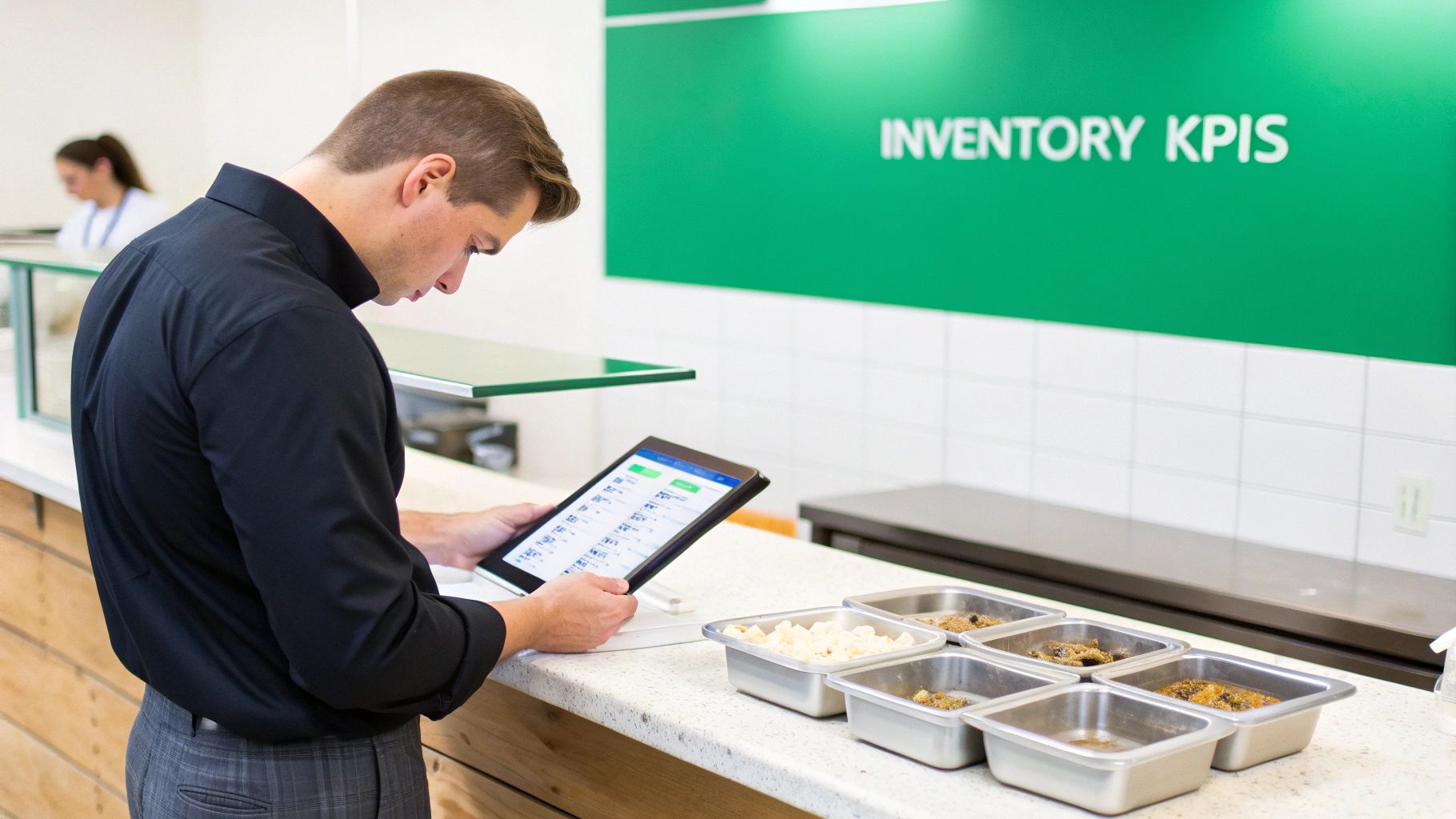
Restaurants often see profit slip away through waste, stockouts, and unreliable vendors. Think of these issues as pinholes in a bucket—each drip gradually erodes your bottom line. Without clear data, you’re always chasing yesterday’s problems.
Take leftover produce tossed at closing. Those scraps might seem harmless, but they can balloon into hundreds of dollars in monthly losses. And with supply chain pressures and rising costs, it’s no wonder 43% of operators point to food cost as their top profit driver, while 31% plan to hike menu prices to cope. For more detail, check out Rezku’s industry report.
Key Pain Points
-
Waste And Spoilage
Overordering and poor rotation can send up to 10% of inventory straight into the trash. -
Stockouts And Missed Sales
Running out of key ingredients forces last-minute menu changes—and disappointed guests. -
Vendor Reliability Issues
Late or partial deliveries derail prep schedules and inflate labor costs.
“Identifying waste leaks is step one to boosting margins by plugging data gaps.”
Critical Metrics To Track
-
Inventory Turnover Rate
How often stock moves before expiry. One bistro used this figure to cut waste and lifted margins by 8%. -
Fill Rate
The percentage of vendor orders fulfilled correctly. Hitting 95% means fewer emergency restocks. -
Forecast Accuracy
Compare your sales projections to reality. Better forecasts translate into less overproduction. -
Cost Of Goods Sold Margin
Food cost divided by sales. A lower percentage signals more profit on every plate.
How To Measure Without Spreadsheets
- Leverage Mobile POS Integration for instant inventory updates at tableside or curbside.
- Use Easy-Setup Dashboards so your key stats appear within minutes.
- Control Multiple Locations with a unified data view across every venue.
- Embrace All-In-One Simplicity by tying ordering, inventory, and analytics together.
- Calculate Projected Savings with our savings calculator.
Vendor Performance Case
A neighborhood café was battling late deliveries and inconsistent quality. They added a vendor scorecard to their TackOn Table dashboard and saw:
- On-Time Delivery Rate: from 70% to 92%
- Order Accuracy: missing items dropped from 12% to 3%
- Price Competitiveness: secured a 5% discount on bulk buys
Tracking vendor KPIs in one platform cut manual follow-ups by half.
The result was steadier fill rates and far fewer emergency orders—proof that real-time data is the heart of solid supply chain management.
Forecasting Tips For Waste Control
Sharpen your forecast accuracy to match orders with genuine demand and slash spoilage. For a deep dive, read our guide on forecasting tips. These methods improve guest satisfaction and simplify menu planning, especially across multiple sites.
Analyzing these metrics helps you predict demand, negotiate better with vendors, and plug tiny leaks before they become costly floods. In turn, you’ll save valuable time and protect your margins.
Ready to track your KPIs without drowning in spreadsheets? Start Your Free Trial and see real-time metrics in under 30 minutes. No credit card required.
Restaurant POS Integration and Supply Chain Software
Bridging your POS with supply chain tools means you’re always working with real-time numbers instead of outdated spreadsheets. TackOn Table’s mobile POS updates inventory the moment a sale is rung up.
In practice, that cuts down on manual entries and nearly eliminates stockouts. With live sales data, par levels and reorder points adjust automatically—no more guessing games.
Restaurant POS Integration Workflow
Before anything else, you’ll link your POS and purchasing platform using secure API keys or webhooks. Then comes the fun part: mapping product SKUs so both systems speak the same language.
- Link inventory items and categories for synced counts
- Configure reorder triggers based on daily sales velocity
- Sync vendor pricing and delivery schedules
- Route accounting entries directly into your general ledger
“Automated integration cut one bistro’s manual restocking time by 70%.”
This setup builds a feedback loop: transactions update stock levels, and when inventory dips, purchase orders flow out automatically. The result? Leaner operations without endless cycle counts.
Toast vs Clover Alternatives & TackOn Table Advantage
To see how TackOn Table stacks up against other POS options and as a Toast vs Clover alternative, review the comparison below:
| Option | Mobile POS | Setup Time | Multi-location Control | Pricing Tier |
|---|---|---|---|---|
| TackOn Table | Yes | Under 30 min | Yes | From $49/mo |
| Clover | Yes | 1–2 hours | Limited | $79+/mo |
| Square | Yes | 1 hour | Basic | $60+/mo |
| Toast | No handheld | 4–6 hours | Yes | $99+/mo |
Even with rapid installation, TackOn Table delivers broad location management at an entry-friendly price. Integrating these systems can reduce order errors by 95% within one week. You might also explore our detailed POS showdown in the TackOn Table vs Clover and Square Restaurant POS Comparison.
Ready to switch from Toast or Clover to an all-in-one solution? Start Your Free Trial or Book A Demo.
Purchasing Platform Connections
Linking to platforms like Procurify or OrderEZ is surprisingly swift. In just minutes you’ll:
- Authorize third-party API access with secure credentials
- Map entire supplier catalogs in under 5 minutes
- Automate invoice retrieval and set up payment reminders
With this in place, manual ordering tasks drop by 85%, freeing your team to focus on service and growth.
Accounting And Vendor Portals Integration
Automating your financial workflows eliminates error-prone data entry and speeds up reconciliation. Here’s a simple three-step process:
- Export vendor bills from the POS in a single batch
- Push transactions into your accounting platform on a set schedule
- Reconcile price variances and receiving confirmations in one dashboard
This streamlined flow can save teams up to 40% of their usual reconciliation time.
Integrating your restaurant’s supply chain with TackOn Table means smarter ordering, real-time delivery tracking, and on-the-fly menu adjustments—all from one screen.
Ready to see inventory syncing live within minutes? Start your free trial at /start-free-trial and streamline your restaurant supply chain management today.
Implementing A Step By Step Roadmap
Every supply chain overhaul needs a clear playbook. This one lays out six consecutive phases—from a single-location pilot all the way to a full multi-unit rollout. At the core, TackOn Table delivers mobile POS simplicity, centralized control, and easy setup to power each step.
We’ve also added week-by-week timelines and visual checkpoints so your team always knows what’s next. You’ll see links to deeper dives—like our purchase order standardization guide or vendor scorecard templates—in the TackOn Table knowledge base. No surprises. No guesswork.
Here Are The Six Phases At A Glance:
- Audit Current Processes
- Define Ordering Policies And Scorecards
- Configure Safety Stock And Order Settings
- Roll Out SOP Templates And Checklists
- Set Up Kanban-Style Progress Boards
- Pilot And Expand To Additional Locations
“A clear roadmap turns restaurant supply chain management from theory into daily practice.”
Phase One: Audit Current Processes
Kick off by mapping every step in ordering, receiving, and storage. This uncovers hidden delays and manual workarounds.
- Document order approval flows
- Track delivery variance over the past 30 days
- Note manual cycle count routines
Use a simple spreadsheet or the inventory audit template to log your findings. This baseline highlights quick wins—like automating approvals with TackOn Table, which you can set up in under two days.
Phase Two: Define Ordering Policies And Scorecards
Next, codify your rules for reorder points, order windows, and vendor performance. When everyone follows the same playbook, ad-hoc decisions disappear.
- Create vendor scorecards (on-time rate, accuracy)
- Set reorder thresholds by category
- Standardize approval levels for emergencies
Link this policy document in TackOn Table so staff see guidelines alongside real-time POS data. The result? Fewer last-minute buys and consistent pricing—starting at just $49/mo.
Phase Three: Configure Safety Stock And Order Settings
With policies locked in, calculate buffer levels to prevent stockouts without ballooning inventory. Then feed those numbers into your POS.
- Input lead times and average daily usage
- Pilot reorder alerts on a test SKU group
- Review and adjust par levels after one week of sales
Thanks to TackOn Table’s live inventory sync, reorder triggers fire automatically—cutting manual checks by 75%. Schedule monthly reviews to fine-tune levels for seasonality or menu changes.
Phase Four: Roll Out SOP Templates And Checklists
Standard operating procedures keep every location rowing in the same direction. Distribute cycle count guides, receiving checklists, and purchase order forms.
| SOP Template | Purpose |
|---|---|
| Cycle Count Guide | Ensures inventory accuracy |
| Receiving Checklist | Verifies order completeness |
| Purchase Order Form | Standardizes ordering details |
Train teams with short video demos. Embed QR codes on printed SOPs and links in TackOn Table so staff can pull up guides tableside. This approach can cut training time by 40%.
Phase Five: Set Up Kanban-Style Progress Boards
Visual management turns tasks into moving parts you can monitor at a glance. Create a Kanban board with these columns:
- To Audit
- Under Review
- Approved Policy
- Configured Settings
- SOP Training
- Go Live
Display this board in your kitchen or online. Color-coded cards reveal bottlenecks instantly and keep teams motivated as tasks flow from left to right.
Phase Six: Pilot And Expand To Additional Locations
Start small—launch your roadmap at one site. Track KPIs like inventory turnover, fill rate, and vendor scores.
- Conduct weekly checkpoints
- Tweak policies based on feedback
- Train the next location in under 2 weeks
Once your pilot hits 90% of target metrics, roll out the same process across all units. With TackOn Table’s multi-location controls, you push settings in just a few clicks—and scale without scaling headaches.
Now, every location follows the same playbook, manual work shrinks, and you can monitor progress in real time.
Ready to see this roadmap in action? Get started with a free trial of TackOn Table and turn your supply chain plan into results.
Start Your Free Trial or Book A Demo
Mitigating Risk And Ensuring Compliance
Managing risk in a restaurant’s supply chain means more than just trimming costs. It’s like having a backup generator ready when the lights go out—it keeps your critical systems alive when normal processes stumble.
Develop Vendor Audit Checklists
- Document Certifications including hygiene, safety, and organic standards.
- Track Delivery Records to log on-time and complete shipments.
- Review Contract Terms for recall clauses and liability coverage.
- Assess Quality Checks by examining temperature logs and inspection reports.
These audit lists spot small gaps before they turn into full-blown crises. Integrating mobile POS data from TackOn Table accelerates each audit cycle and keeps your team on point.
Visualizing The Compliance Process
The flowchart below breaks down a three-stage compliance cycle.
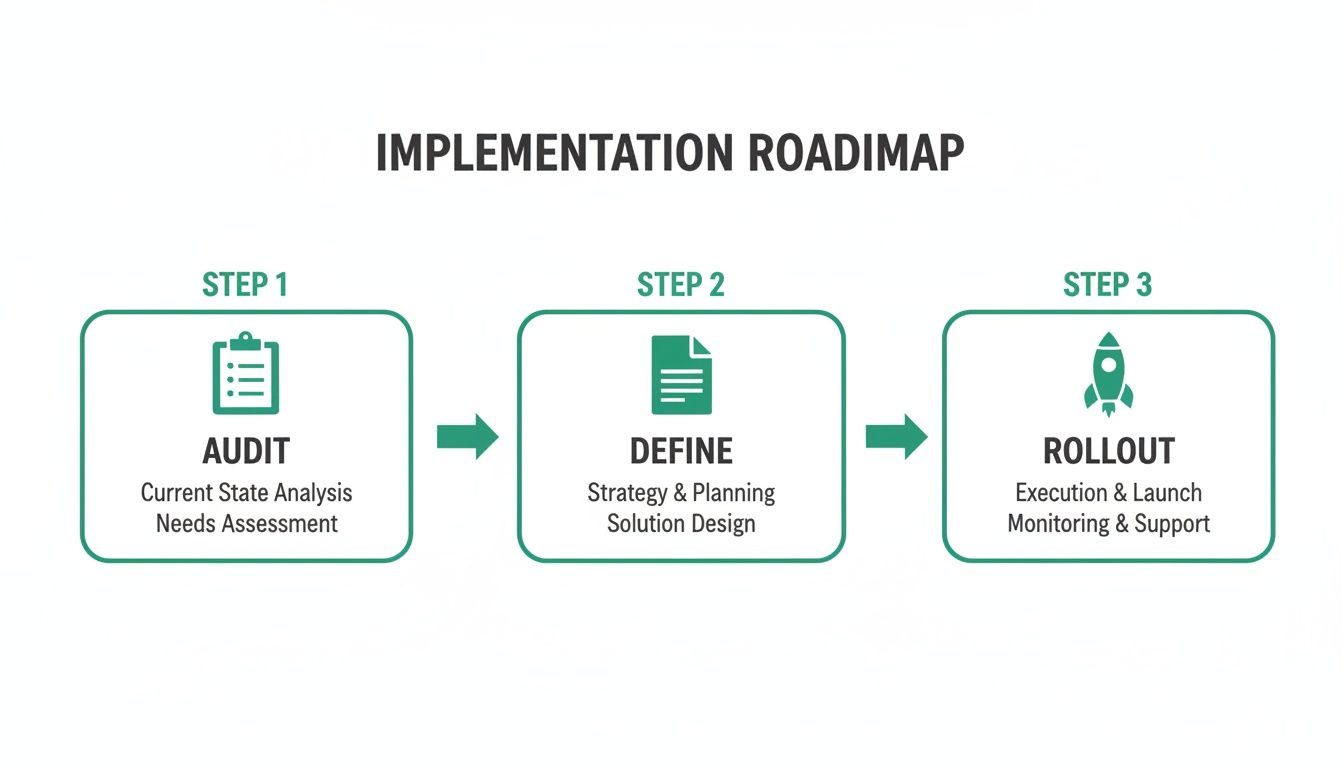
In Stage 1, audits uncover hidden weaknesses. Stage 2 defines clear roles and procedures. Stage 3 rolls out policy updates so everyone stays on track.
Create Contingency Sourcing Plans
Backup vendors stand guard against sudden shutdowns. Set clear trigger points for supplier failures and flip orders over instantly.
- Identify alternative suppliers by location, capacity, and price.
- Pre-negotiate terms to secure priority spots during peak periods.
- Document substitution protocols with defined approval steps.
A neighborhood café ran a mock vendor outage and still achieved a 95% fill rate thanks to swift order toggles in TackOn Table’s multi-location control.
Maintain Digital Compliance Records
Cloud-based logs become your single source of truth. Automated traceability slashes recall response times.
- Instant access to timestamped records for each ingredient batch.
- Secure backups that meet PCI DSS and SOC 2 requirements.
- Role-based permissions so only the right people can edit logs.
"Auditable records ensure rapid cleanup after a safety incident and reduce liability."
Pair this with TackOn Table’s all-in-one simplicity to eliminate manual errors entirely.
Implement Regular Compliance Reviews
Schedule quarterly risk reviews with cross-functional teams. Review audit findings, then update SOPs to reflect new regulations.
- Compare vendor performance against 90% SLA targets each quarter.
- Document corrective actions and assign clear ownership.
- Feed compliance metrics into monthly leadership dashboards.
These regular check-ins keep your program in step with evolving health codes.
Leverage Mobile POS For Rapid Inspections
Handheld POS devices let you log compliance checks tableside. Instant syncing flags issues before the dinner rush.
- Record temperature readings during prep rounds.
- Verify staff certifications on the spot with digital IDs.
- Snap storage-area photos and tag them with timestamps.
One multi-unit group cut inspection prep time by 60% using tablets in the kitchen.
Best Practices For Audit Readiness
Clear, concise vendor contracts prevent misunderstandings. Train your crew on digital record-keeping and run mock inspections regularly.
- Use color-coded alerts for expiring certifications.
- Link SOP updates directly within your POS interface.
- Archive past audit reports for trend analysis.
With TackOn Table’s easy setup, you can deploy these practices in under a day.
Addressing risk and compliance not only protects your revenue—it builds guest trust. Centralizing all controls in a single cloud platform also slashes overhead.
Ready to secure your supply chain with mobile POS simplicity and multi-location visibility? Start Your Free Trial Today and build resilient compliance. Or Book A Demo Now to see audit workflows live.
FAQ
What Is Restaurant Supply Chain Management
Restaurant supply chain management covers everything from sourcing ingredients to tracking deliveries. It’s the backbone that keeps dish costs under control and ensures your menu stays consistent.
How Can I Reduce Waste Through Forecasting
Forecasting replaces gut feel with hard sales data, so you only order what you truly need. For example, syncing your mobile POS sales can boost forecast accuracy by 20%, drastically cutting down on spoilage.
- Use historical sales trends for staple menu items
- Adjust par levels before big events or promotions
- Set up automated reorder alerts to avoid last-minute rushes
The result? Fewer emergencies, less waste, and a smoother kitchen prep routine.
Which KPIs Should I Track First
Zero in on the metrics that spotlight inefficiencies and vendor hiccups:
- Inventory Turnover Rate – how often stock cycles before it spoils
- Fill Rate – percentage of orders delivered on time and in full
- Cost of Goods Sold Margin – food cost divided by total sales
Monitoring these KPIs tells you exactly where waste leaks and supply gaps occur.
How Do I Scale To Multiple Locations
With TackOn Table’s multi-location control, you can push inventory settings out to all venues in a single click. This approach delivers standardized processes, live stock levels, and consolidated reporting. For step-by-step guidance on multi-unit workflows, see our Solutions Guide.
How To Choose Supply Chain Software
Look for tools that are intuitive, integrate seamlessly with your mobile POS, and support multiple sites. TackOn Table installs in under 30 minutes and keeps everything synced in real time. Dive into the full feature list in our Solutions Guide.
“Real-time inventory data is the backbone of proactive ordering.”
Ready to see it live? Start your free trial or book a personalized demo.
For one-on-one support, book a demo with our team.
TackOn Table https://www.tackontable.com now
See how TackOn Table works for your restaurant. Same-day call →