Opening a coffee shop means building a dream, and that dream runs on equipment. You absolutely need a core set of tools covering everything from brewing and grinding to chilling milk and ringing up sales. Getting these foundational pieces right—like a commercial espresso machine, a top-notch burr grinder, reliable refrigeration, and a smart Point of Sale (POS) system—is everything. This isn't just about making coffee; it's about building a business that's efficient, consistent, and set up for success from the very beginning.
Building Your Coffee Shop Equipment List From Day One
It's easy to get lost in the romance of opening a café, but that vision of happy customers and the perfect latte is built on a very practical foundation: the right gear. Your success hinges on the tools you choose. They dictate the quality of your drinks, the speed of your service, and ultimately, your bottom line.
To make sure you don't miss a single screw or filter, a detailed guide like this ultimate coffee shop equipment checklist is a lifesaver. It helps you think through every purchase before you spend a dime.
This guide will walk you through each category of equipment, explaining not just what you need, but why you need it. More importantly, we'll help you separate the "must-haves" from the "nice-to-haves" so you can be smart with your startup cash.
Essential vs Optional Coffee Shop Equipment
Knowing where to invest your initial funds is one of the biggest challenges for new coffee shop owners. The table below breaks down the absolute must-haves you need to open your doors versus the optional items you can add later as your business grows. This will help you prioritize your spending and focus on what truly matters on day one.
| Equipment Category | Essential Items (Must-Haves) | Optional Items (Nice-to-Haves) |
|---|---|---|
| Brewing & Grinding | Commercial Espresso Machine, Espresso Grinder, Drip/Batch Coffee Brewer, Burr Coffee Grinder | Pour-Over Station, High-End Single-Dose Grinders, Cold Brew System (can be DIY'd at first) |
| Refrigeration | Under-Counter Milk Fridge, Commercial Refrigerator (for food, drinks), Ice Machine | Display Case Refrigerator, Walk-in Cooler, Under-Counter Freezer |
| Bar & Support | Hot Water Dispenser, Blender (for frappes), Water Filtration System, Knock Box | Panini Press, Toaster, Microwave, Juicer |
| Warewashing | 3-Compartment Sink, Handwashing Sink, Dishwasher (depending on local code) | Glass Washer, Sanitizing System |
| Storage & Prep | Stainless Steel Prep Tables, Wire Shelving, Ingredient Bins | Espresso Shot Timers, Milk Pitcher Rinsers |
| Operations | Point of Sale (POS) System, Cash Drawer, Receipt Printer, Credit Card Reader | Customer-Facing Display, Kitchen Display System (KDS), Barcode Scanner |
Focusing on the "Essentials" column ensures you have a fully functional bar capable of producing high-quality drinks and serving customers efficiently. The "Optional" items are fantastic for expanding your menu and improving workflow, but they can wait until you have steady cash flow.
The Role of an Integrated Restaurant POS
Here’s something many new owners overlook: your equipment doesn't work in isolation. Every piece needs to communicate, and your café management software is the conductor of that orchestra. An all-in-one system like TackOn Table pulls everything together, connecting your hardware and making your entire operation run smoothly.
A great POS system is so much more than a cash register. It’s the brain of your shop. It tracks your inventory with every latte sold, helps your baristas take orders faster, and gives you the hard data you need to make smart decisions about your menu and staffing. It turns a bunch of separate machines into a single, cohesive business.
As a powerful and affordable Toast vs Clover alternative, TackOn Table is built for simplicity and adaptability. You can get it set up and running in under 30 minutes, avoiding the complicated hardware installations and expensive contracts that eat into your startup budget. Its all-in-one simplicity means you get mobile ordering, multi-location control, and powerful analytics in one easy-to-use package.
This frees up more of your cash to invest in that dream espresso machine while still giving you a powerhouse management tool. By connecting your operations from the start, you create a seamless experience for both your staff and your customers—setting the stage for growth from the moment you open your doors.
Learn more about how TackOn Table provides a complete solution for modern cafes: https://tackontable.com/solutions/cafes/
Choosing Your Core Brewing and Grinding Equipment
Let's be clear: your espresso machine and grinder are the heart and soul of your coffee shop. They aren't just hunks of metal; they are the tools that turn roasted beans into revenue, and they will likely be the single largest investment on your coffee shop equipment list. Getting this choice right is absolutely critical. It dictates the quality of your coffee and how smoothly your baristas handle the morning chaos.
This decision will directly shape your shop's reputation. A machine that chokes during a rush or a grinder that can't produce a consistent particle size will lead to long lines and bad coffee. And that's a surefire way to send potential regulars straight to the competition.
This flowchart lays out a smart way to think about your budget, separating the must-haves from the nice-to-haves.
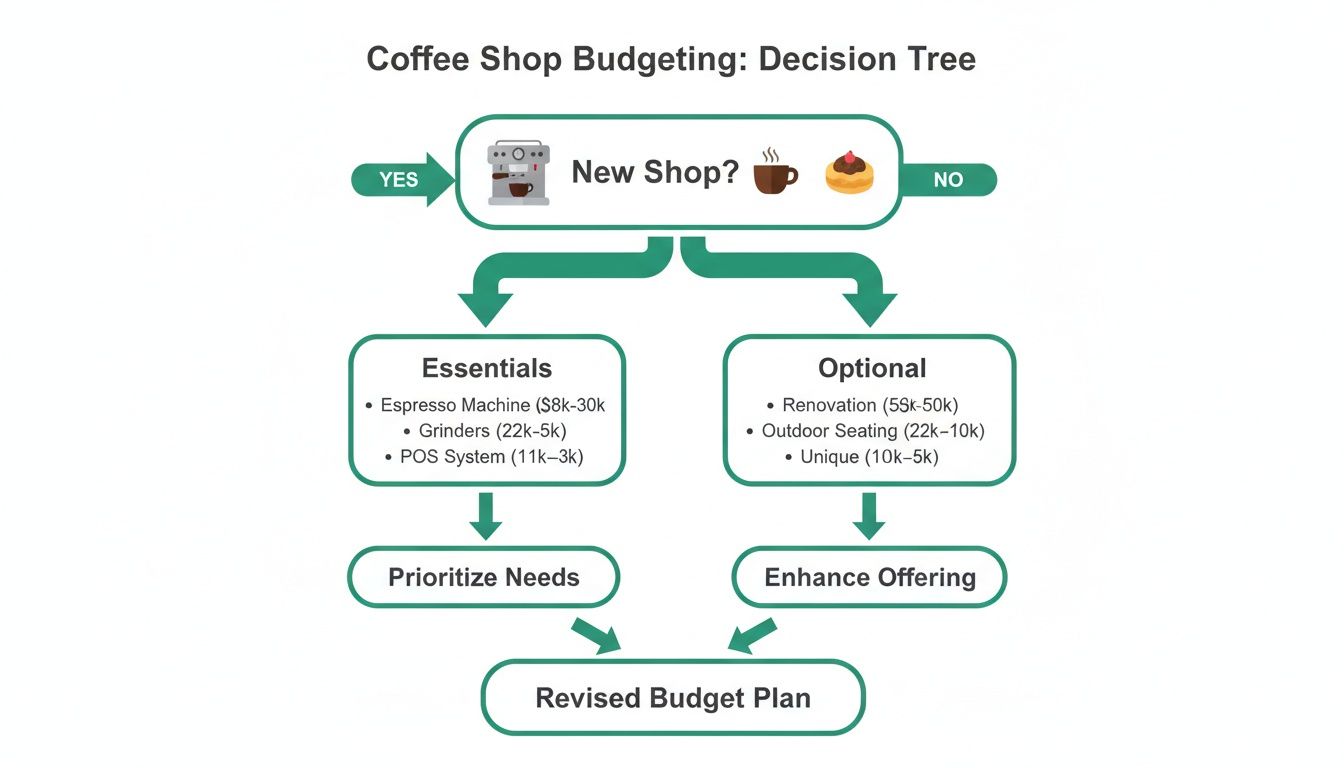
The big takeaway here is to lock down your core, money-making gear first. Only after that's covered should you start thinking about the optional items that can expand your menu but aren't essential to opening the doors.
Selecting the Right Commercial Espresso Machine
The demand for great coffee isn't slowing down. The global coffee machine market was valued at USD 20.03 billion and is expected to climb to USD 26.77 billion by 2031. A huge chunk of that growth—32.1% of the market, in fact—comes from commercial automatic and semi-automatic machines. This tells us that shop owners are looking for equipment that delivers quality while helping them manage labor costs. You can get more details from the full research on commercial coffee machine market trends.
When you start shopping, you’ll find three main types of espresso machines:
- Semi-Automatic: These give your baristas the most hands-on control. They start the shot and stop it manually. It's the perfect choice for a shop focused on the craft and artistry of coffee, but it demands skilled baristas to maintain consistency.
- Automatic (Volumetric): This is the workhorse of most busy cafes. The barista pushes a button to start the shot, and the machine cuts it off automatically based on a pre-set water volume. This delivers amazing shot-to-shot consistency, even when things get hectic or you have newer staff on the bar.
- Super-Automatic: Think of these as "bean-to-cup" machines. They do it all—grind, tamp, and brew with a single button press. They're built for speed and are ideal for places where staff aren't trained baristas, like hotels or quick-service restaurants.
Your business model is the deciding factor. For most specialty coffee shops, an automatic two-group machine hits the sweet spot between quality, consistency, and speed. A "group" or "grouphead" is where the portafilter locks in to brew espresso. Having two groups means two baristas can work side-by-side, which is a lifesaver during peak hours.
Why Your Grinder Is Just as Important
You could drop thousands on a top-tier espresso machine, but it’s all for nothing without an equally impressive grinder. A high-quality burr grinder isn't optional; it's a necessity. Unlike a cheap blade grinder that just smashes beans into uneven chunks, a burr grinder mills them into a uniform size.
Think of it like this: brewing espresso is like trying to run water through a bucket of rocks. If the rocks (your coffee grounds) are all different sizes, water will just rush through the big gaps and avoid the finer dust. The result? A weak, sour, and horribly under-extracted shot. But with uniform grounds, you create consistent resistance, allowing the water to extract all that delicious flavor evenly, every single time.
For any serious café, you'll need at least two grinders: one for your main espresso blend and a second for decaf or a rotating single-origin bean. When you invest in great grinders and pair them with a powerful Restaurant POS, you create a seamless workflow where quality meets efficiency—setting your shop up for success from day one.
Equipping Your Bar for a Diverse and Profitable Menu
Your espresso machine might be the heart of your operation, but a truly profitable menu needs a full circulatory system to back it up. If you want to move beyond simple lattes and black coffee, you need the right tools to build out a diverse menu. This is how you get more out of every customer visit, turning a quick coffee run into a much bigger sale.
The idea is to build a fully functional bar that keeps humming along, even during that chaotic morning rush. Every single piece of equipment should have a clear purpose, whether it's making your workflow smoother or adding another profitable item to your menu. This is a crucial part of your overall coffee shop equipment list, because these are the tools that let you upsell and appeal to a wider audience.
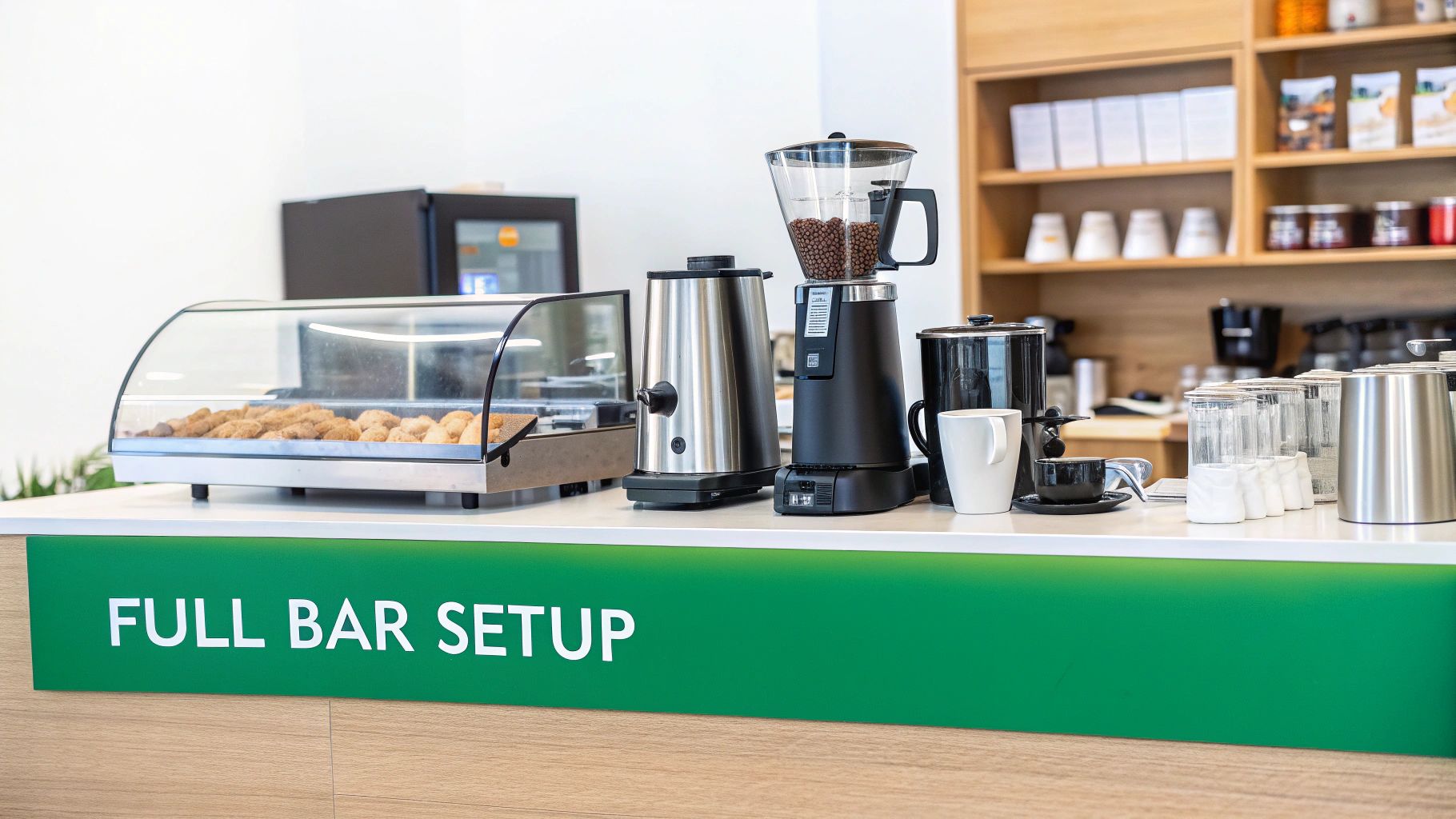
Expanding Your Beverage Menu
Espresso is your foundation, but other drinks are essential for boosting sales, especially when the weather gets warm. These machines can open up completely new, high-margin product lines for your shop.
- Commercial Blenders: A powerful, workhorse blender is non-negotiable for any modern coffee shop. It's your ticket to a lucrative menu of frappes, smoothies, and other blended drinks that people love. Pro tip: Look for models with a sound enclosure. It'll keep the noise down and maintain a chill vibe for your customers.
- Drip Coffee Brewers: Not everyone is looking for an espresso-based drink. A commercial batch brewer lets you serve fantastic drip coffee quickly and consistently, which is perfect for that morning commuter crowd who just wants a great cup of coffee without a long wait.
- Hot Water Dispenser: This sounds almost too simple, but a dedicated hot water tower is a workflow game-changer. It frees up your very expensive espresso machine from the basic job of pouring hot water for Americanos and tea. This lets your baristas stay focused on pulling perfect shots and steaming milk.
Think of your bar's equipment like a well-trained team. The espresso machine is the star player, but it can't win the game alone. The blender, brewer, and hot water tower are the essential support players who handle their specific roles perfectly, allowing the whole team to perform at a higher level.
This kind of setup means you can handle all sorts of customer requests without creating a traffic jam behind the counter. It's all about building a system where every component works together to get drinks out fast and right, every time.
Refrigeration: The Unsung Hero of Your Bar
You can't cut corners on refrigeration. It’s the bedrock of food safety and product quality. Skimping here can lead to spoiled milk, failed health inspections, and a reputation you don't want. You're going to need more than just one fridge.
Here’s a simple way to map out your cold storage needs:
- Under-Counter Milk Fridge: This belongs right at the bar, giving your baristas instant access to milk and dairy alternatives. It's all about speed and workflow.
- Display Case Refrigerator: This is your silent salesperson. A glass-front display case, placed strategically near the register, is perfect for tempting customers with bottled drinks, sandwiches, and pastries. It’s all about encouraging those impulse buys.
- Back-of-House Refrigerator: You'll also need a larger reach-in or walk-in unit in the back for bulk ingredients, backup milk, and food items. This keeps your front bar area clean, organized, and uncluttered.
Each type of refrigeration has a very specific job, from speeding up service to actively driving sales. When you plan your cold storage this way, you make sure your ingredients stay fresh and your operation runs smoothly.
And when your physical equipment is this organized, plugging it into a smart café management software like TackOn Table becomes a breeze. You can easily track your inventory levels for milk, syrups, and grab-and-go items, ensuring you never run out of a bestseller again.
Ready to see how a streamlined POS can manage your newly expanded menu?
Book a Demo with TackOn Table
Your Restaurant POS: The Brain of the Operation
If your espresso machine is the heart of your coffee shop, then your Point of Sale (POS) system is the brain. Let's be honest, in today's world, a simple cash register just won't cut it. Your POS is the command center that ties everything together—from the moment a customer orders a latte to the sales report you pull at the end of the night.
Picking the right café management software is just as important as choosing your coffee beans. The right system brings a sense of calm to the chaos of a morning rush, making sure your team is in sync and customers get their orders quickly and correctly. It’s the digital backbone supporting your entire coffee shop equipment list.
Beyond Just Taking Payments
A modern POS is so much more than a credit card swiper. It’s the central hub that connects every part of your business through one clean interface. This is where systems like TackOn Table really make a difference, offering a ton of power without the usual complexity or high price tag.
Think about it. When your barista punches in an order for a large vanilla latte with oat milk, a great POS does all this at once:
- Fires the order to the right prep station instantly.
- Updates your inventory, deducting milk, syrup, and beans in real-time.
- Logs the sale and tracks it against your daily revenue goals.
- Adds the purchase to a customer’s loyalty account.
This all-in-one simplicity means fewer mistakes, faster service, and much smarter business decisions. You get a live, accurate view of your shop's health without trying to stitch together data from five different spreadsheets.
The POS Features Every Modern Café Needs
Not all POS systems are built the same. As a powerful Toast vs Clover alternative, TackOn Table was designed specifically for the hustle of a modern café, focusing on speed, flexibility, and control. Its low cost and simple setup mean you can be up and running in under 30 minutes, which is a massive win for any new shop owner. For a full breakdown, check out our guide on how TackOn Table compares to other top POS systems.
A truly effective POS doesn't just record sales; it makes your entire operation more efficient. It gives your staff mobile tools, lets you manage multiple shops from one dashboard, and delivers the sales data you need to actually grow your profits.
This kind of operational edge is becoming non-negotiable. For example, the Asia-Pacific region is now the fastest-growing market for coffee equipment, expanding at a 7.80% CAGR. This boom, especially in places like China and India, shows why you need a system that can grow with you, whether you're opening a second shop across town or just trying to keep up with demand. You can read more about these global coffee market trends to see why a flexible POS is so crucial.
A great system should solve common café headaches. Here’s how:
- Mobile POS: Give your staff handhelds to take orders in line or at tables. This keeps the line moving and the customers happy during that morning rush.
- Multi-Location Control: Manage menus, pricing, and employee access across all your stores from one place. It’s the key to keeping your brand consistent as you expand.
- Easy Setup: You shouldn’t need to hire an IT specialist to get started. A user-friendly system like TackOn Table is designed for coffee shop owners, not tech wizards.
Choosing an affordable and adaptable platform means you aren't trapped in a pricey, long-term contract. That frees up cash to invest in other things that matter, like top-tier brewing gear and great training for your team.
Choosing the right POS platform is a game-changer for any coffee shop. It's not just about processing payments anymore; it's about building a smarter, more efficient business from the ground up.
POS Feature Checklist for Modern Coffee Shops
To help you cut through the noise, here’s a quick checklist of what to look for in a POS system. We've compared the must-have features against what TackOn Table offers to give you a clear picture of what a modern, café-focused system can do.
| Feature | Why It's Critical for Cafés | How TackOn Table Delivers |
|---|---|---|
| Mobile & Handheld Ordering | Busts long lines during morning rushes and enables tableside service, speeding up turnover. | Staff can take orders anywhere with tablets or phones, sending them directly to the bar. |
| Real-Time Inventory Tracking | Prevents you from running out of milk, beans, or syrups mid-shift. Crucial for managing costs. | Automatically deducts ingredients from stock with every sale, with low-stock alerts. |
| Integrated Loyalty Program | Encourages repeat business and helps you build a community around your brand. | Built-in loyalty and rewards system that's easy for customers to join and use. |
| Multi-Location Management | Allows you to scale your business without the operational headaches of managing each store separately. | A single dashboard to control menus, pricing, employees, and reporting for all locations. |
| Intuitive User Interface | Reduces training time for new baristas and minimizes errors during busy periods. | Simple, clean interface designed for speed and ease of use, even for seasonal staff. |
| Affordable & Transparent Pricing | Avoids locking you into expensive, long-term contracts with hidden fees that eat into profits. | Offers clear, straightforward pricing without requiring long-term commitments. |
| Robust Sales Analytics | Provides actionable insights into best-selling items, peak hours, and customer trends to grow revenue. | Powerful, easy-to-read reports that help you make data-driven decisions. |
Ultimately, the right POS will feel less like a piece of tech you have to use and more like a partner that's actively helping you run and grow your business.
Ready to see how a smarter POS can transform your cafe's operations?
Start Your Free Trial with TackOn Table
Stocking Your Front and Back of House for Opening Day
It’s easy to focus on the big, shiny espresso machine, but the real secret to a successful coffee shop lies in the hundreds of smaller items that keep the whole operation running. This part of your coffee shop equipment list is all about the essential tools for your front-of-house (FOH) and back-of-house (BOH). Get this right, and you'll have a smooth, clean, and professional shop from day one.
If you skimp on these details, you're setting yourself up for service bottlenecks, failed health inspections, and a chaotic mess for your staff. A well-stocked shop means your team has exactly what they need, right where they need it, to pull perfect shots and keep the place spotless.
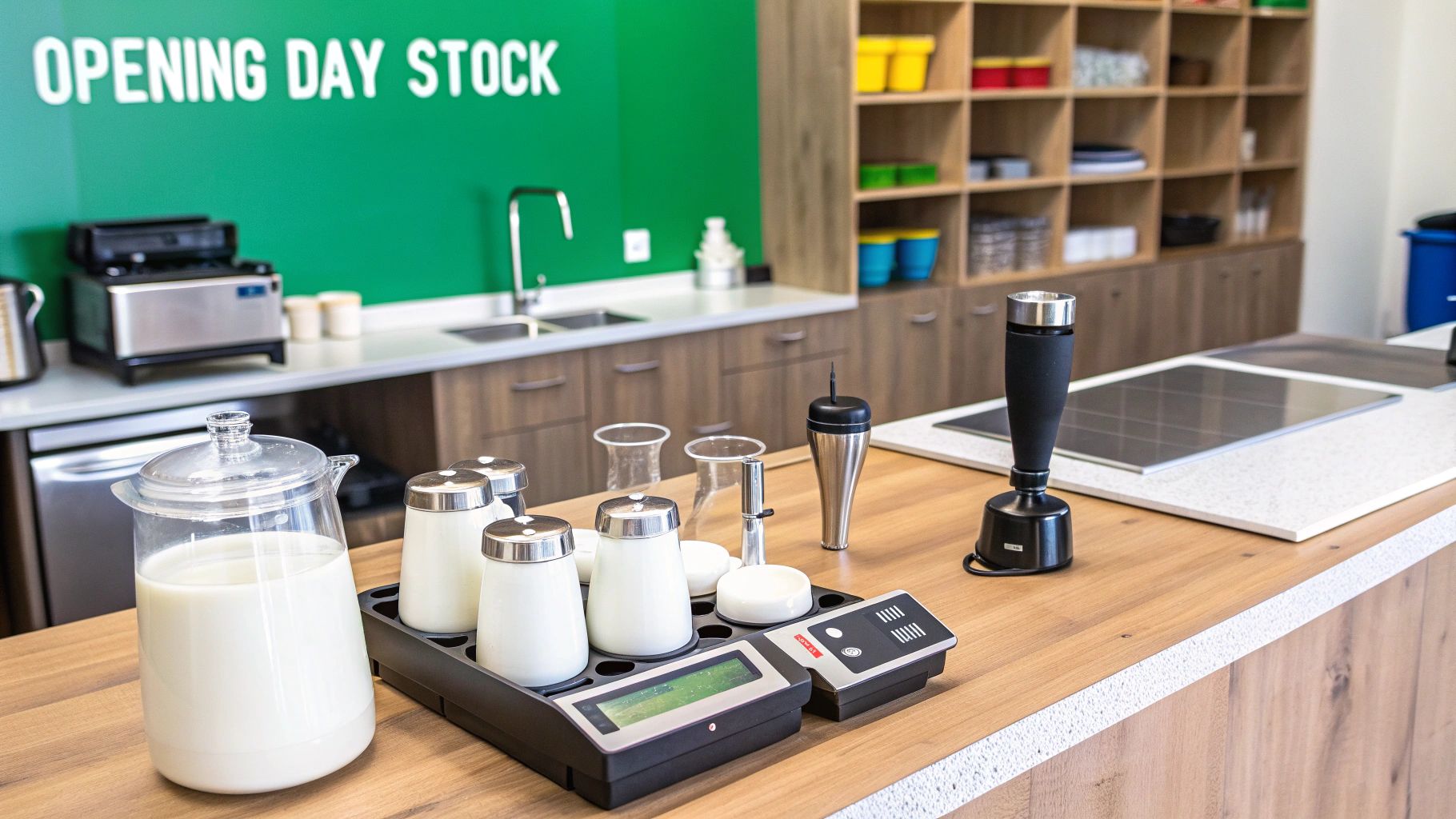
Front of House Smallwares and Serving Essentials
Your FOH is where customers see the magic happen. The tools here are all about precision, consistency, and most of all, speed. A dialed-in bar setup lets baristas fly through orders without ever having to stop and hunt for a tool.
Here are the absolute must-haves for your barista station:
- Milk Steaming Pitchers: You can't have just one. Get several in different sizes (like 12 oz and 20 oz) to cut down on milk waste and match the drink you're making.
- Digital Scale: This is non-negotiable for quality. It’s how you weigh coffee doses for every single espresso and pour-over, making sure every cup is as good as the last.
- Tampers and Tamping Mat: A good, solid tamper gives you that consistent puck compression you need for an even extraction. The mat is just as important—it protects your counters and gives your baristas a stable surface to work on.
- Knock Box: A simple but vital piece of kit. It’s for getting rid of used espresso pucks quickly and cleanly, which keeps the workflow moving without a mess.
- Glassware, Ceramic Cups, and Disposables: You need the full range. Stock up on ceramic mugs for your "for-here" crowd and have a complete inventory of paper cups, lids, and sleeves ready for the to-go rush.
Think of your FOH smallwares as a surgeon's toolkit. Each instrument has a precise function, and having them all clean, organized, and within arm's reach is the key to a flawless performance, especially under the pressure of the morning rush.
Back of House Sanitation and Storage Solutions
Customers might never see your BOH, but it’s the heart of your entire café. This space is all about meeting health codes, keeping food safe, and managing your inventory. A poorly equipped back-of-house is a fast track to failed inspections and total chaos.
To keep the health inspector happy and run a clean shop, you'll need:
- Three-Compartment Sink: In most places, this isn't a suggestion—it's the law. You need it for the wash, rinse, and sanitize process for all your dishes and tools.
- Dedicated Handwashing Stations: You absolutely must have separate sinks just for handwashing, complete with soap and paper towels, in your prep areas and restrooms.
- NSF-Certified Shelving: This is the industry standard for a reason. NSF-certified wire shelving is tough, easy to sanitize, and lets air circulate, which is crucial for food safety.
- Airtight Storage Containers: Your coffee beans, syrups, and other dry goods need to be stored properly. Airtight, clearly labeled containers keep everything fresh and make inventory a breeze.
By investing in these foundational items, you’re not just getting ready for opening day; you’re building a system for long-term quality and success. Of course, tracking all these supplies can be a headache, which is why a smart inventory system is so valuable. You can use our savings calculator to see just how much an integrated system can save your business by cutting waste and keeping stock levels just right.
Planning for Maintenance and Finding Reliable Suppliers
Buying all that shiny new equipment is the fun part. But keeping it running smoothly? That's where the real work—and profit—happens. Think of your espresso machine and grinders as the heart of your business. If you don't take care of them, they'll eventually give out, usually at the worst possible time (hello, 8 AM rush).
This isn't about being a master mechanic. It's about building simple, repeatable habits that prevent those catastrophic, business-halting breakdowns. A proactive maintenance schedule protects your biggest investments, keeps your coffee tasting consistently amazing, and saves you from a world of stress. A well-maintained machine is a profitable one. Period.
Creating a Simple Maintenance Checklist
A few minutes of care each day can prevent thousands of dollars in repairs down the road. Even the most durable equipment needs routine TLC. For a great primer, check out these effective coffee maker cleaning techniques that help your brews taste great and your gear last longer.
Create a straightforward checklist and make it a non-negotiable part of your team's routine. Break it down by how often things need to be done.
- Daily Tasks (End of Day): Backflush the espresso machine's group heads with a cleaning agent. Purge and wipe down the steam wands until they sparkle. Thoroughly clean the portafilters, drip trays, and grinders.
- Weekly Tasks: Go a little deeper. Soak portafilters and their baskets in a cleaning solution to break down stubborn oils. Give the gaskets and shower screens a good look to check for wear.
- Monthly Tasks: Time for a health check. Inspect your water filtration system, recalibrate your grinders to ensure consistency, and listen for any weird noises or look for small leaks that could signal a bigger problem brewing.
Think of preventive maintenance as a small, daily investment in your shop’s future. Every five-minute cleaning task you complete saves you from a potential five-hour, thousand-dollar repair down the line. It's the cheapest insurance policy you can buy.
Finding Reliable Suppliers and Service Techs
Your gear is only as good as the people who can fix it. Don't wait for a machine to break down to frantically Google "espresso machine repair near me." Line up your local suppliers and certified service techs before you even buy the equipment.
When you're talking to potential partners, ask the important questions. What’s their average response time for an emergency call? Do they keep parts for your specific models in stock? Building a relationship with a local tech who knows your machines inside and out is one of the smartest things you can do. They're the partner who will keep your doors open and your coffee shop equipment list making you money.
The same goes for your POS provider. A system like TackOn Table comes with 24/7 support, meaning the nerve center of your operation is always looked after. This kind of dependability, from your espresso machine to your software, is what truly sets a café up for long-term success.
Ready to see how a reliable POS partner can support your growth?
Frequently Asked Questions About Coffee Shop Equipment
When you're staring down your first coffee shop equipment list, it’s easy to feel overwhelmed. Let's clear up a few of the most common questions I hear from new owners.
What are the absolute "must-have" items for a new coffee shop?
If your budget is forcing you to make some tough calls, focus on the three pieces of equipment that directly make you money and keep your quality high. You simply can't open your doors without them.
- Commercial Espresso Machine: This is the heart and soul of your cafe. It's your primary revenue generator, so don't skimp here. A reliable, workhorse machine is a must.
- Burr Grinder: The best espresso machine in the world can't save a bad grind. A quality burr grinder is what gives you the consistent, perfect grounds needed to pull amazing shots, cup after cup.
- Commercial Refrigerator: This is a non-negotiable for food safety. It keeps your milk—your most-used ingredient—at a safe temperature and ensures you're always up to health code.
Is buying used equipment a good idea for a coffee shop startup?
I get it, the temptation to save a few thousand dollars on used equipment is strong. But honestly, it's a huge gamble for a new shop.
Used gear almost never comes with a warranty, and you have no idea what its service history looks like. Imagine your machine going down during the peak of your morning rush. The lost sales and damage to your reputation will cost you far more than you saved upfront. Investing in new equipment buys you reliability and, just as importantly, peace of mind.
How does a POS system fit in with my kitchen equipment?
A modern Restaurant POS is so much more than a cash register; it's the brain of your whole operation. Think of a system like TackOn Table as your co-pilot. It connects what you sell directly to what you have on the shelf.
When a barista rings up a latte, the system automatically subtracts the milk, espresso, and syrup from your inventory counts in real-time. This isn't just about tracking; it's about making your equipment and ingredients work smarter. You can see what you need to order before you run out, which cuts down on waste and last-minute supply runs. As an affordable and straightforward Toast vs Clover alternative, it gives you powerful tools without the headache of a complex setup.
At TackOn Table, we believe running your business shouldn't be complicated. See how our all-in-one system can pull all the pieces together and help you grow, right from the start.
Book a Demo