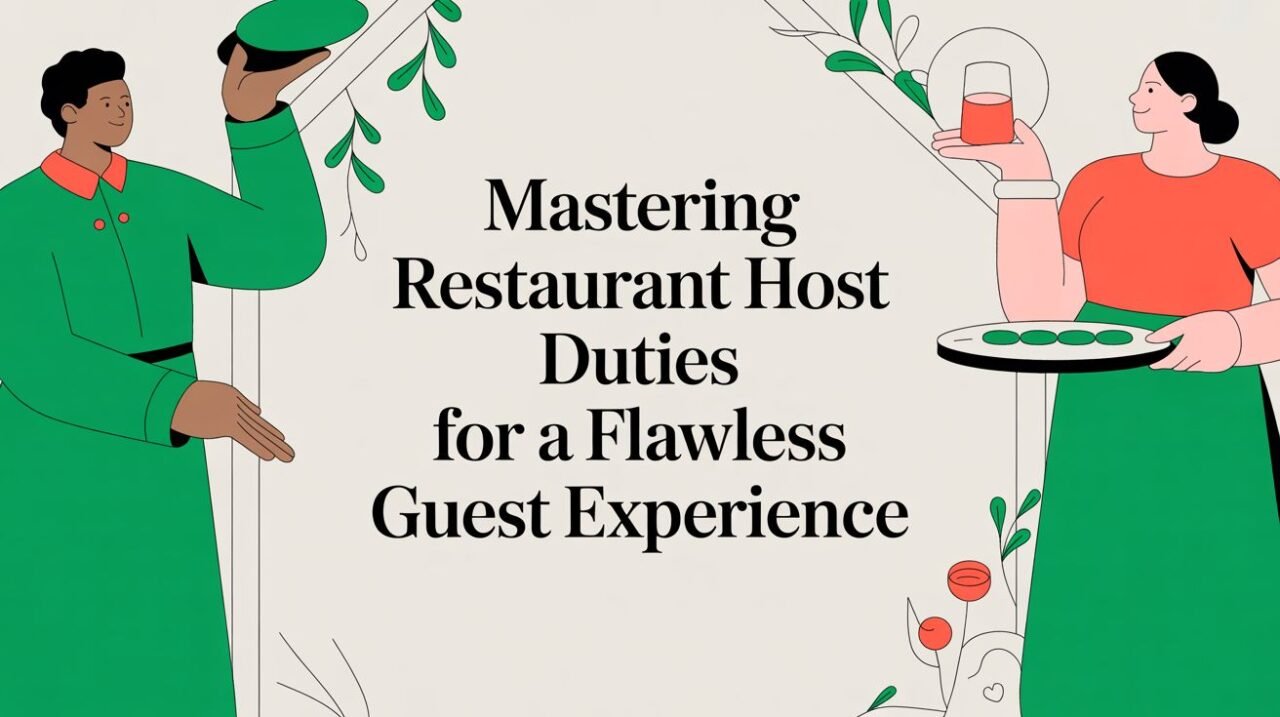
A restaurant host does so much more than just say hello. They are the gatekeepers of the entire dining experience, managing the flow of guests, orchestrating the waitlist, and setting the tone from the moment someone walks in. Since they're the first and last point of contact for every customer, their performance is directly tied to guest satisfaction and, ultimately, your bottom line.
The Host Stand: From First Impression to Command Center
It's time to stop thinking of the host stand as just a podium and start seeing it for what it truly is: your restaurant's command center. The person running it isn't merely a greeter; they're the air traffic controller for your entire dining room. Their job is to guide guests, manage the floor, and prevent the whole system from descending into chaos during a dinner rush.
The old-school view of this job seriously underestimates its impact. A great host doesn't just fill empty seats. They strategically manage the floor to maximize your table turnover rate, prevent servers from getting triple-sat and overwhelmed, and keep the kitchen from getting slammed with orders all at once. It's a delicate balancing act that directly impacts your nightly revenue.
And yet, so many restaurants still hand their hosts a clipboard, a paper floor chart, and wish them luck. This outdated method is a recipe for disaster. It creates bottlenecks, forces your host to be reactive, and leads to all those all-too-common problems: a guest's "quick" 20-minute wait turning into 45, a server getting buried, or a reservation getting lost in the shuffle. These issues almost always begin with a disorganized host stand.
The modern host role has evolved from a reactive greeter into a proactive experience manager. Their ability to orchestrate the guest journey from the moment they walk in is fundamental to a restaurant's success.
This is where having the right tools can completely change the game. When you empower your host with a modern, all-in-one platform, the position is transformed. Instead of desperately trying to keep up with a paper waitlist and manually tracking tables, they can use smart tools to work more efficiently and anticipate problems before they happen.
A powerful Restaurant POS system, for example, gives your host a real-time, bird's-eye view of everything happening on the floor. With a system like TackOn Table, they can see which tables are open, which are about to clear, and how each server's section is looking. Our solution offers features designed to streamline the entire process:
- Real-Time Table Management: Instantly see every table's status—occupied, clearing, open—to make smarter seating decisions and slash wait times.
- Digital Waitlist & Reservations: Automate text notifications to waiting guests and seamlessly integrate your online bookings with your floor plan.
- All-in-One Simplicity: Everything you need—waitlist, reservations, and seating charts—is integrated into one intuitive interface, reflecting our commitment to affordability and adaptability.
By giving your host the right technology, you turn the front door from a potential point of chaos into a powerful asset. You set them up to drive efficiency and set the stage for a truly flawless dining experience from start to finish.
Before we dive deeper into the day-to-day operations, let's quickly summarize the host's primary duties. This table breaks down their key tasks, from traditional responsibilities to those enabled by modern tools.
Core Restaurant Host Responsibilities at a Glance
| Duty Category | Key Tasks and Responsibilities |
|---|---|
| Guest Welcome & Experience | Warmly greet all arriving guests. Manage expectations for wait times. Answer phone calls and address inquiries. Thank departing guests and invite them back. |
| Floor & Waitlist Management | Manage the waitlist (manual or digital). Strategically assign tables to balance server workloads. Communicate with servers and bussers about table status. |
| Reservation Coordination | Take, confirm, and manage all reservations. Plan seating for large parties and special requests. Communicate any guest notes (allergies, celebrations) to the staff. |
| Operational Support | Assist with bussing tables during peak hours. Help with takeout order coordination. Maintain cleanliness and organization of the front entrance and host stand. |
As you can see, the role is a dynamic mix of hospitality, logistics, and communication. Now, let's break down what a typical shift looks like, step-by-step.
A Restaurant Host's Essential Duties: The Shift Checklist
To really understand what a host does, you have to look at their entire shift from start to finish. A great host turns the potential chaos of the front door into a smooth, welcoming experience for every single person who walks in. We can break their core responsibilities down into three main parts: getting ready before service, managing the floor during service, and closing things down afterward.
This isn't just about greeting people anymore. The host role has grown, especially with new technology. A modern host is less of a simple greeter and more of a strategic manager of the dining room.

As you can see, the better the tools a host has, the more critical their job becomes. They are now on the front lines, directly managing guest flow and shaping the overall dining experience.
Pre-Shift Prep: Setting the Stage for a Smooth Service
The first 30 minutes of a host’s shift might just be the most important. This is their chance to get ahead of the game, gathering all the information they'll need to make quick, smart decisions when things get busy. Good preparation is all about preventing problems before they even have a chance to start.
Here’s what that looks like:
- Review Reservations: The host dives into the reservation list for the shift. They're looking for large parties, special requests (like an anniversary or a food allergy), and any VIPs who need extra attention.
- Study the Floor Plan: They need to know the server sections for that specific shift. Understanding who has which tables is key to rotating seating fairly and keeping the servers from getting overwhelmed.
- Check Station Supplies: A quick inventory check ensures the host stand is ready for action. Are there enough menus? Pens? For restaurants using modern tools like TackOn Table, this is also when they make sure the mobile POS tablets are fully charged and ready for action.
This role is a cornerstone of the hospitality industry. In 2023, there were 308,881 hosts and hostesses in the United States alone. Interestingly, 82.7% of them are women, which really speaks to the interpersonal skills required for the job. After all, managing reservations and greeting guests with a cool head is what makes or breaks the start of a meal. You can find more interesting demographic details on hosts and hostesses from Data USA.
During Service: Managing the Flow
Once the doors open and guests begin to arrive, the host’s job shifts from prep work to active management. This part of the shift is a constant balancing act—juggling guest interactions, strategic seating, and clear communication with the rest of the team.
A host’s main job during service isn’t just to seat people. It’s to orchestrate the entire dining room’s rhythm. They have to keep guests happy while keeping the operation running efficiently, creating a steady flow that supports both the servers and the kitchen.
During service, a host's duties get even more involved:
- Greeting and Seating: Every guest gets a warm welcome, complete with eye contact and a genuine smile. The host then guides them to a clean, ready table that fits into the overall seating strategy for the night.
- Managing the Waitlist: This is where modern tools are a game-changer. Instead of shouting names across a noisy lobby, a system like TackOn Table lets hosts run a digital waitlist. They can give guests accurate wait times and send a quick text when their table is ready, which drastically cuts down on people giving up and leaving.
- Handling Phone Calls and Inquiries: The host stand is mission control. They handle incoming calls for reservations, field questions about the menu or hours, and sometimes even take takeout orders.
- Coordinating with Staff: A host is constantly talking to the team. They let servers know they have a new table and clue in bussers on which tables need to be cleared next to keep the waitlist moving.
Post-Shift: Closing and Handoff
The last few tasks of the shift are all about ensuring a clean slate for the next day and a smooth handoff to the next team. This means cleaning and organizing the host stand, passing on any important notes or unresolved issues to the closing manager, and getting the reservation book prepped for the next shift. It’s the final touch on a day dedicated to order and hospitality.
Ready to see how an all-in-one system can supercharge your host stand?
Start Your Free Trial of TackOn Table
Skills That Define a Five-Star Restaurant Host
When you think about your host, what comes to mind? Is it just someone ticking names off a list? A truly great host is so much more. The difference between an average host and a five-star one comes down to a handful of critical soft skills—the kind that can’t be taught from a manual but make all the difference to your guests and your bottom line.

Imagine a sudden Saturday night rush hits, or a frustrated couple arrives to find their reservation is nowhere to be found. A good host might get flustered. A great one sees it as a challenge, diffusing the tension with poise and finding a smart solution. It's this blend of quick thinking, genuine empathy, and unshakable calm that protects the guest experience when things inevitably go sideways.
Grace Under Pressure and Proactive Communication
The best hosts are masters of emotional intelligence. They can instantly read the room—and every person who walks through the door—and adjust their approach accordingly. This is where you can turn a potentially bad situation into a memorable save.
For instance, simply telling a walk-in party there’s a 45-minute wait is one thing. A stellar host takes it a step further. They'll warmly explain the situation, suggest a comfortable spot at the bar, and give a confident assurance that they'll get them seated the moment a table opens up. That small bit of proactive communication makes a guest feel cared for, not just like another number on a waitlist. Ultimately, fantastic customer service is the foundation of the role.
A top-tier host acts as a buffer between front-of-house chaos and the guest's experience. They absorb pressure and radiate confidence, assuring every person who walks in that they are in capable hands.
This kind of high-level service requires significant mental energy. If your host is constantly battling a clunky, outdated system, their focus is on the screen, not on the people in front of them. This is exactly why an intuitive café management software like TackOn Table can be a game-changer. By handling tasks like waitlist management and table statuses automatically, our platform frees up your host to do what they do best: create a welcoming atmosphere.
Tech as an Enabler of Hospitality
Modern tools aren't here to replace the human touch—they're here to amplify it. With TackOn Table’s famously easy setup and mobile POS, your host can manage the entire floor from a tablet, update a table's status with a single tap, and stay in perfect sync with the kitchen and servers. This frees them from being chained to the host stand, allowing them to engage directly with guests.
Here’s how it works in the real world:
- Anticipate Needs: A real-time floor plan lets the host see a table is wrapping up, so they can get the next party ready to go. This simple act makes wait times feel shorter.
- Personalize Service: Guest notes can remind the host about a regular’s favorite table or that a couple is celebrating an anniversary, making for a truly personal welcome.
- Solve Problems Faster: When a reservation mix-up occurs, the host can instantly pull up all the booking details without rifling through a messy binder.
As a smart Toast vs Clover alternative, TackOn Table is built on simplicity and affordability, putting exceptional hospitality within reach for any restaurant. Our system empowers your host to stop managing clunky tech and start managing the guest experience.
Ready to see how our platform can elevate your host stand?
Book a Demo with TackOn Table
How a Modern Restaurant POS Supercharges Your Host Stand
It's time to ditch the pen, paper, and chaotic clipboards. The modern restaurant host stand shouldn't be just a reception desk; it needs to be a high-tech command center. A modern Restaurant POS is the single most powerful tool you can give your host, transforming their role from reactive to proactive and solving the most common front-of-house bottlenecks.
Think about the classic Saturday night dinner rush. Using traditional methods, the host is juggling a scribbled waitlist, a paper floor chart that's constantly changing, and a barrage of questions from both guests and staff. It's a recipe for long waits, inaccurate time quotes, and a stressed-out team. A smart POS system completely changes this story.

This is where a platform like TackOn Table becomes a real strategic advantage. It's an investment in smoother operations that pays off directly in your guest experience and, ultimately, your bottom line.
Streamline Waitlists and Reservations
Managing a growing waitlist is one of the biggest headaches that comes with the host job. A digital waitlist, built right into your POS, is an absolute game-changer. Instead of shouting names over a noisy dining room, your host can simply text guests when their table is ready.
This one feature has a massive ripple effect:
- Reduces Walk-Aways: Guests feel in control and are free to grab a drink at the bar or browse nearby shops, making them far less likely to get impatient and leave.
- Improves Accuracy: The system can calculate data-driven wait time estimates, which helps you set realistic expectations right from the start.
- Centralizes Bookings: All your online reservations sync up automatically, getting rid of double-bookings and the tedious errors that come with manual entry.
With TackOn Table, all of this is handled in one clean interface, giving your entire front-of-house team a single source of truth to work from.
Master Your Floor with Real-Time Table Management
A great host knows how to strategically seat the floor to balance server workloads and maximize table turns. A paper chart is outdated the second you write on it, but a modern POS gives you a live, color-coded map of your entire dining room.
A POS with integrated table management gives your host a bird's-eye view of the whole floor. They can see which tables are occupied, which are paying out, and which are ready for the next guest—all in real time.
This visual data empowers hosts to make smarter, faster decisions. They can avoid overwhelming one server, pinpoint which tables need to be cleared next, and turn tables much more efficiently—often boosting nightly revenue by 10-15%. TackOn Table’s mobile POS feature even lets managers or hosts update table statuses on a tablet from anywhere on the floor, keeping the system perfectly in sync. Exploring a modern full-service restaurant POS system shows just how much efficiency is waiting to be unlocked.
As a smarter Toast vs Clover alternative, TackOn Table delivers this all-in-one simplicity without the steep price tag. We believe powerful technology should be accessible, adaptable, and incredibly easy to use. By giving your hosts the right tools, you empower them to elevate the guest experience from the very first hello.
Ready to see how our platform can transform your front-of-house operations?
Start Your Free Trial
How to Hire and Train an Unbeatable Host Team
Your host stand is only ever as strong as the person running it. Finding and keeping the right people in that role is absolutely crucial, yet it's an area famous for high turnover.
Let’s be honest about why. The median salary for a host in the U.S. is around $30,000 a year, often trailing what people can make in similar service jobs. Couple that with the high-pressure, often understaffed environment that’s become common since 2021, and you've got a recipe for burnout. This makes retaining great hosts a real uphill battle.
Building a solid team begins long before the first day of training. It starts with how you attract them. Don't just list tasks in a job post; you need to paint a picture of how important this person is to the entire guest experience and the rhythm of your restaurant.
Crafting the Perfect Job Description
Think of your job description as your first sales pitch. It’s your chance to tell a potential star host why your restaurant is the place to be. Get specific about what makes an exceptional host in your particular dining room.
Here’s a snapshot of how you might frame it:
"We're looking for a proactive and personable Host to be the first and last impression for our guests. You'll be the conductor of our dining room, orchestrating reservations and making sure every single person feels welcomed and valued from the moment they walk in. Your role will involve greeting guests, managing our digital waitlist, and communicating with servers to create a seamless service. The ideal person for this job is a calm, organized problem-solver who genuinely enjoys a fast-paced environment."
See the difference? This approach highlights impact and skills, not just a list of chores. It attracts candidates who want to be a vital part of the team.
Smart Interview Questions and Onboarding
Once you have a pool of candidates, your interview questions need to dig deeper than "Tell me about yourself." You're looking for proof of the soft skills that make or break a host. Put them in real-world scenarios.
Insightful Interview Questions:
- "It's a busy Saturday night, and you've just quoted a 45-minute wait. The phone is ringing off the hook. Walk me through how you'd handle that situation."
- "A party of four with a reservation arrives on time, but their table isn't quite ready. What are your immediate next steps?"
- "How do you balance seating servers fairly to spread out the covers, while also trying to accommodate a guest's specific request for a booth by the window?"
When it comes to training, a detailed onboarding checklist is your best friend. It needs to cover everything from your seating strategy and server sections to how to operate your POS system.
This is where a system like TackOn Table can make a huge difference. Our platform is known for its easy setup and straightforward design. We even provide free training to get new hires up and running in record time, so they can manage the floor with confidence from their very first shift. To make training even more efficient, you can also look into using AI tools to create training materials that your team can access anytime.
Ready to see how a simple, all-in-one system can make training a breeze? Get started today by exploring our free trial request options.
Why the Host Is Your Restaurant's Most Valuable Player
In the fast-paced world of restaurants, it's easy to think the action is all in the kitchen or on the dining room floor. But the truth is, your most valuable player might just be the first person your guests see: the host. They're no longer just a friendly face at the door; they've become the central nervous system of the entire operation, managing guest flow, juggling a constant stream of takeout and delivery orders, and directly influencing your bottom line.
The years following the pandemic really threw a spotlight on just how critical this role is. Between 2021 and 2023, diners came roaring back, but restaurants were often struggling with major labor shortages—over a million jobs in food service were left open. This put immense pressure on hosts, who were tasked with managing packed houses and long waitlists with a smaller team. As highlighted in industry reports, this period forever changed the job, making a sharp, organized host an absolute game-changer. You can dig deeper into how the host role evolved into such a key position on Emerging.com.
Driving Profitability from the Front Door
A well-run host stand isn't just about keeping things running smoothly—it's a profit center. Every single decision your host makes, from quoting an accurate wait time to seating the right party in the right section, has a ripple effect. It impacts your table turnover rate, your average guest spend, and overall efficiency.
When a host is on their game, they prevent servers from getting triple-sat and overwhelmed. They can pace the flow of orders to keep the kitchen from getting buried. In short, they keep the entire dining room humming, which means more guests served and more revenue earned.
This is exactly where TackOn Table comes in. Our all-in-one Café Management Software takes the complex juggling act of restaurant host duties and organizes it into a single, intuitive dashboard. By automating the manual work, it frees your host to focus on what really matters: creating a personal, welcoming experience that turns first-time visitors into loyal regulars.
Think of it this way: equipping your front-of-house with the right technology is a direct investment in your profitability. An empowered host using a smart system can increase table turns and significantly boost your revenue, night after night.
Our platform was built on the idea of all-in-one simplicity. It’s an affordable and flexible option compared to more rigid systems like Toast or Clover. With a powerful mobile POS for managing the floor and tools for multi-location control, you give your team everything they need to succeed. Curious about the financial impact? You can calculate your potential savings with our simple online tool.
It’s time to stop thinking of the host stand as just a greeting station. It’s the command center of your restaurant—and a huge opportunity to drive revenue.
Ready to see how an empowered host can transform your restaurant?
Book Your Free Demo Today
Frequently Asked Questions About Restaurant Host Duties
What is the most important duty of a restaurant host?
The single most important part of a host's job is mastering the first impression. It’s all about creating a genuinely warm welcome, providing accurate wait times, and ensuring the journey to their table feels seamless. This first touchpoint sets the stage for the entire dining experience. A positive start makes guests feel valued and is the first step in earning a loyal customer.
How does a POS system help with restaurant host duties?
A modern POS system like TackOn Table acts as a host's command center. It automates tedious tasks, freeing the host to focus on guest interaction. Instead of juggling paper lists and shouting names, the system can:
- Automate the digital waitlist with text alerts for ready tables.
- Provide a real-time, visual floor map showing table statuses (open, occupied, clearing).
- Integrate all online reservations to prevent double-bookings and manual errors.
It transforms the host stand from a point of chaos into a hub of calm, strategic control, allowing the host to make smarter seating decisions and provide a more personal guest experience.
Ready to see how TackOn Table can simplify your front-of-house operations and empower your team?