
Your restaurant's table turnover rate is simply the number of different parties you serve at a single table within a set time. Think of it as the pulse of your dining room. A faster pulse often means more revenue, while a slower one might point to opportunities you're missing. As an expert in restaurant management software, we know that mastering this metric is a direct path to a healthier bottom line.
Why Table Turnover Is Your Restaurant's Secret Weapon
Getting a handle on your table turnover isn't about pushing people out the door. It's about finding that sweet spot—an operational rhythm that maximizes how much you earn while making sure every guest has a great time.
It's a tricky balance, for sure. But nailing it is one of the most effective ways to boost your bottom line, especially during those crazy-busy dinner rushes. Even a small tweak, like turning just one extra table each night, can add up to thousands of dollars in new revenue over the course of a year.
Before we get into the "how," let's quickly break down the concept with a simple table. This is a great reference for you and your team to understand what we're really talking about and why it's so important.
Table Turnover At a Glance: What It Is and Why It Matters
| Concept | Brief Explanation | Impact on Your Restaurant |
|---|---|---|
| Table Turnover Rate | The number of times a table is used by a new party during a specific time frame (e.g., a dinner service). | A higher rate means more guests served and higher potential revenue from the same physical space. |
| Guest Experience | The overall feeling a customer has about their visit, from seating to payment. | Efficient turnover feels smooth, not rushed. Rushing guests hurts repeat business. |
| Operational Efficiency | How smoothly your front-of-house and back-of-house teams work together. | Better efficiency reduces "dead time" (empty tables, long waits) and naturally improves turnover. |
| Profitability | The financial gain after all expenses are paid. | Improving turnover directly increases your revenue potential without raising your fixed costs like rent. |
As you can see, this isn't just a number to track; it's a reflection of your entire operation's health. This key metric is shaped by things you have complete control over. To improve your turnover, you need to look at your whole service, from the moment a guest walks in until they pay the bill.
Core Factors You Can Control
- Staff Efficiency: Are your servers, hosts, and bussers working like a well-oiled machine? A team that communicates well can shave precious minutes off every turn.
- Menu Design: Is your menu easy to read and understand? A simple, clear layout helps customers decide faster, which gets orders into the kitchen that much sooner.
- Floor Plan: Does the layout of your dining room help or hinder your staff? A smart floor plan avoids bottlenecks and allows everyone to move freely and efficiently.
- Technology Stack: Are your tools working for you or against you? The right technology can speed up crucial parts of the service, from taking an order to processing a payment.
Mastering table turnover is less about speed and more about efficiency. The goal is to eliminate dead time—the minutes a table sits empty or a guest waits for a check—transforming wasted moments into revenue-generating opportunities.
The Role of Your Restaurant POS
This is where a modern Restaurant POS can be a game-changer. Older, clunky systems often create friction, forcing servers to run back and forth to a single terminal to punch in orders or run credit cards.
A more streamlined system like TackOn Table gives you the real-time data and mobile tools you need to manage your floor effectively. As a powerful and affordable alternative to complex platforms like Toast or Clover, TackOn Table delivers all-in-one functionality with a simple interface that's perfect for bustling cafés, food trucks, and even multi-location restaurants. Our advantage lies in our affordability, simplicity, and adaptability.
With our intuitive mobile POS, your team can take orders and payments right at the table. This one change dramatically cuts down service time, allowing you to serve more guests without ever sacrificing the quality of their experience.
Ready to see how a smarter POS can transform your operations? Get started with a free trial or book a personalized demo to discover the TackOn Table difference.
How to Calculate Your Table Turnover Rate
Figuring out your restaurant's table turnover rate sounds complicated, but it's actually one of the most straightforward and powerful numbers you can track. You don't need a degree in math or a complex spreadsheet.
The formula is beautifully simple:
Table Turnover Rate = Number of Parties Served / Number of Tables
This little equation gives you the average number of times each table was used during a specific period, whether it's your lunch rush or the entire day.
Putting the Formula into Practice
Let's see how this works in the real world. Say you run a cozy little diner with 10 tables.
-
Busy Friday Night Dinner (5 PM – 10 PM): You seat 35 different parties.
- Calculation: 35 parties / 10 tables = 3.5
- What this means: On average, each of your tables served three and a half different groups of guests that night. Not bad at all.
-
Quiet Weekday Lunch (11 AM – 2 PM): You only serve 12 parties.
- Calculation: 12 parties / 10 tables = 1.2
- What this means: Each table was used just a little over once, telling you it was a much slower service.
Now, let's look at a completely different scenario: a 25-table fine dining restaurant. During a busy weekend brunch, they serve 50 parties. Their rate would be 2 (50 parties / 25 tables). Even though they served more people, their turnover is lower. Why? Because the fine dining experience is all about lingering.
Key Takeaway: Your table turnover rate isn't just a number—it's a story about your restaurant's pace and style. Use it to understand the rhythm of your service, not just to measure speed.
Getting this balance right has a huge impact on your business, from efficiency to guest satisfaction.
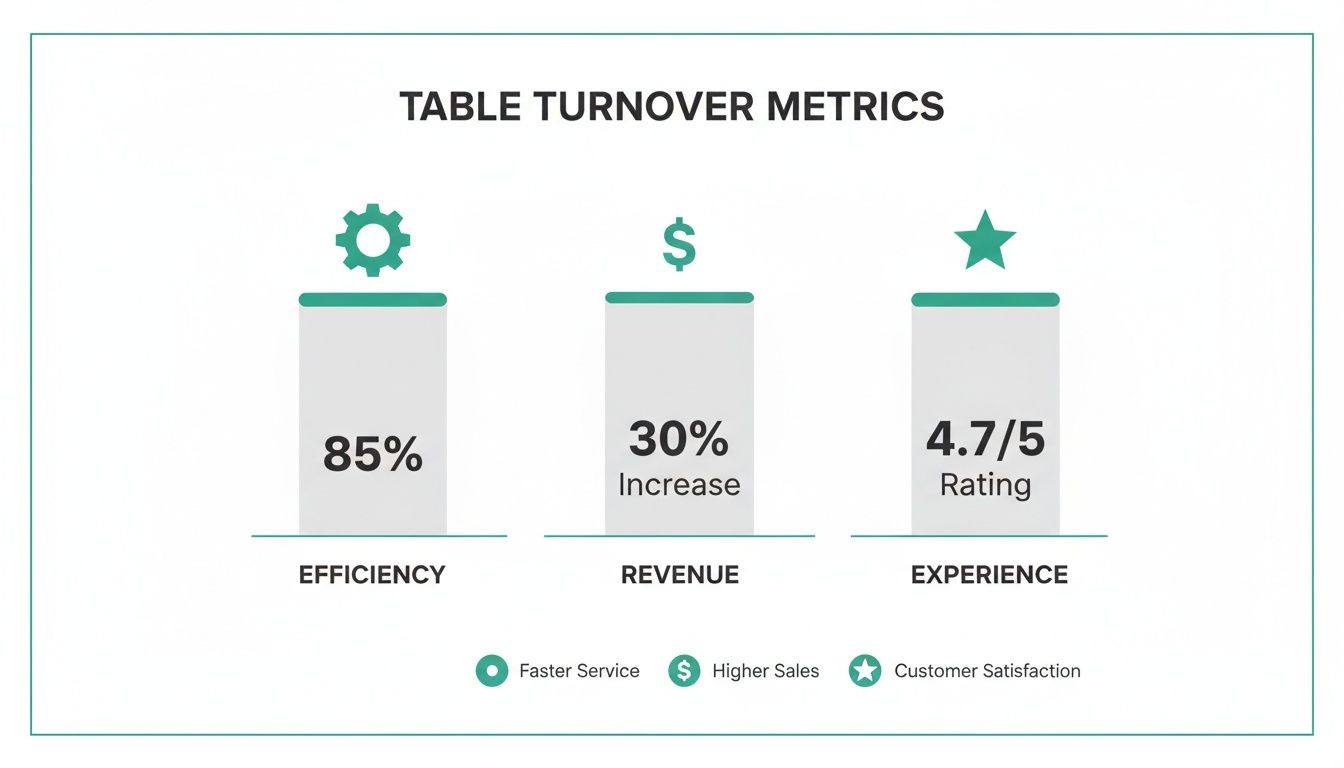
As you can see, a well-managed turnover rate isn't about rushing people out the door. It’s about finding that sweet spot where operations run smoothly, revenue climbs, and customers leave happy.
Beyond the Basic Calculation
Table turnover rate is a fantastic starting point, but pairing it with another key metric gives you the full story on profitability. The perfect partner metric is Revenue Per Available Seat Hour (RevPASH). It moves beyond just how many parties you serve and tells you how much money each seat is making you every hour.
Of course, tracking all this by hand is a major headache. That's where a system like TackOn Table comes in. Instead of scribbling on a notepad or wrestling with spreadsheets after a long shift, our system does the math for you. Its all-in-one simplicity means you get your table turnover rate, RevPASH, and other vital stats right on your dashboard, in real time. It's about getting the powerful insights you need to grow, without the complexity or high cost.
As a rule of thumb, a typical dinner rush turnover rate hovers around 3. Casual restaurants might aim to turn tables every 45-60 minutes, while fine dining establishments often see guests stay for 90-120 minutes. Knowing where you stand helps you set realistic goals.
Curious to see what a small improvement could mean for your bottom line? Plug your own numbers into our tool to calculate your potential savings and see the difference it can make.
Decoding the Numbers: What Is a Good Table Turnover Rate?
So you’ve got the formula down, but what’s the magic number you should be aiming for? Truth is, there isn't one. The ideal table turnover rate is baked into the very identity of your restaurant.
Think about it: a busy downtown café cranking out lunch orders has a completely different mission than a quiet, upscale restaurant known for three-hour tasting menus. One lives and dies by volume, the other sells a luxurious, unhurried experience. If the café tried to be a fine dining spot, it would go broke. If the fine dining spot tried to be a café, it would alienate every guest.
This means your goal isn't just about speed. It’s about finding your optimal turnover time—that perfect sweet spot where you’re maximizing revenue without a single customer ever feeling like they're being pushed out the door. It’s a delicate dance between efficiency and hospitality.
Benchmarks for Different Restaurant Types
To get a feel for where you stand, it helps to look at some general industry benchmarks. While your restaurant is unique, these numbers provide a solid starting point for measuring your own performance.
- Quick-Service & Fast-Casual: These spots are all about high volume. The target is to turn tables every 30 to 45 minutes. Customers expect a quick in-and-out experience, and that pace is crucial for profitability.
- Casual Dining: This is your neighborhood bistro or family-friendly pub. The vibe is more relaxed, so you're looking at a target turnover time of around 45 to 60 minutes.
- Fine Dining: Here, the meal is the evening's entertainment. Guests are meant to savor the experience, so turnover times can easily stretch from 90 minutes to two hours or even longer. Rushing a guest here would completely miss the point.
The goal isn't just to turn tables faster; it's to turn them smarter. An optimal table turnover rate maximizes your revenue per minute while ensuring guests leave happy and eager to return.
The Financial Sweet Spot
Nailing this optimal time isn’t just about making guests happy—it has a direct and powerful impact on your bottom line. Push people out too quickly, and you’ll see smaller checks and get hit with bad reviews. Let them linger too long during a busy dinner rush, and you’re literally watching potential revenue walk out the door.
The data backs this up. A 2017 study that crunched the numbers on millions of transactions found a fascinating financial peak: the optimal restaurant table turnover time is 45 minutes. At that mark, revenue per minute maxes out at $2.21. But if that dining time doubles to 80 minutes, the revenue per minute plummets to $1.54, even if the check is bigger. This proves just how much "campers" can eat into your profitability during peak hours.
Knowing your turnover rate is a great start, but it's even more powerful when you connect it to the bigger picture, like understanding your overall profit margins.
How a Smart Café Management Software Helps You Find Your Rhythm
Setting goals is one thing, but actually tracking your progress in the heat of service is another. This is where a powerful but straightforward Café Management Software like TackOn Table becomes your best friend. We designed it as an adaptable and affordable alternative to systems like Toast or Clover, specifically for owners who need clear insights, not confusing software.
The TackOn Table dashboard gives you a live look at your turnover rates, average dining times, and sales data. You can instantly see how you're tracking against your goals, spot where service is bogging down, and make decisions based on real numbers. With features like mobile POS for tableside ordering and payment, you can naturally speed things up without ever compromising that crucial guest experience.
Ready to stop guessing and start knowing your numbers? Book a demo to see how our reporting tools can help you find your perfect turnover rate, or start your free trial today.
Actionable Strategies to Improve Your Table Turnover
Knowing your restaurant's table turnover rate is one thing. Actually doing something about it? That’s where the real money is made. Improving this metric isn't about rushing guests out the door. It's about fine-tuning your entire operation to shave off wasted minutes and create a smoother, more profitable service that feels great for both customers and your team.
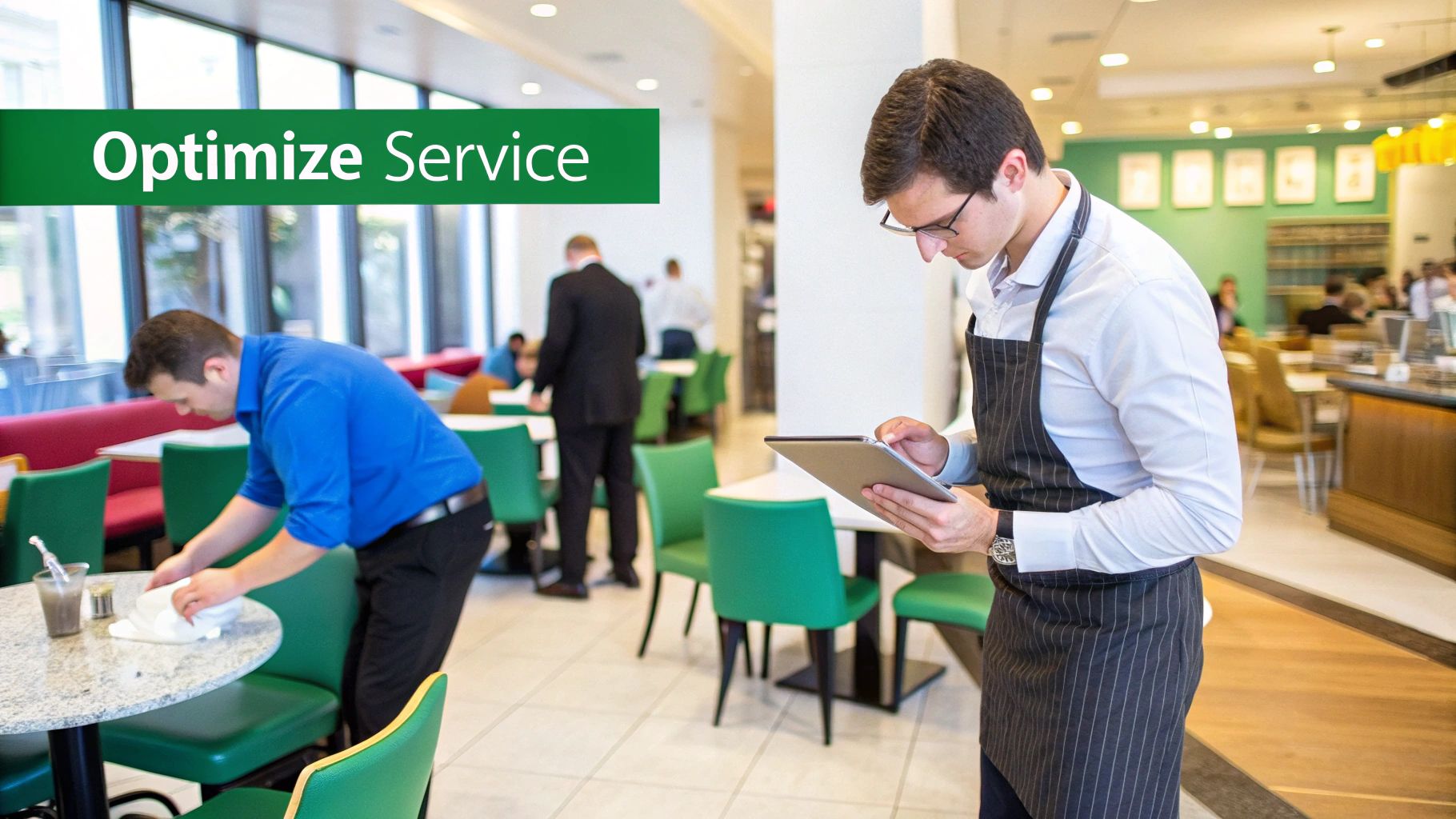
Let's dive into a playbook of practical strategies you can start using tonight, broken down into four key areas. Each one is designed to help you serve more guests and boost revenue without ever compromising the quality of their experience.
Streamline Your Operational Workflow
Efficiency starts with a rock-solid process. Think about it: small delays at every step—seating, ordering, paying, clearing—add up to a ton of lost revenue by the end of a busy night. The goal is to make the entire guest journey seamless.
A classic bottleneck is seating incomplete parties. While it might feel like a nice gesture, letting a partial group take a table means that table is occupied but not earning its keep. The guests who are there just wait for their friends before ordering. Enforcing a "seat complete parties only" policy, especially during your busiest hours, ensures every table is generating revenue right from the get-go.
Another critical area is bussing. A dirty, empty table is a profit killer. It should never sit for more than a couple of minutes. Train your bussers and servers to operate like a pit crew—clearing, wiping, and resetting tables with practiced speed. The moment a server takes a payment, they should be signaling a busser to get that table ready for the next guest.
Engineer Your Menu for Speed
Your menu isn't just a list of food; it's a strategic tool for managing your kitchen's pace and guiding your guests' choices. A massive, confusing menu often leads to "decision paralysis," where guests take forever to order, which backs up both the server and the kitchen.
A well-designed menu helps people choose quickly and confidently. Try these tactics:
- Simplify and Organize: A good rule of thumb is to limit each section to about seven items. It's a psychological sweet spot that keeps people from feeling overwhelmed. Use clear headings and logical groups to make it easy to navigate.
- Highlight Fast Items: Use subtle visual cues like boxes or icons to draw attention to dishes that are not only popular but also quick for your kitchen to prepare. This gently steers guests toward choices that keep things moving.
- Identify Bottlenecks: Look at your ticket times. Are there one or two dishes that consistently slow everything down? If a complex plate is causing delays across the board, it might be time to simplify the prep or take it off the menu.
Optimize Your Floor Plan and Atmosphere
The physical layout of your dining room has a huge impact on how efficiently your team can work. A poorly designed floor plan creates literal roadblocks, slowing down servers, bussers, and food runners.
Start by walking through your restaurant. Are there clear, wide pathways from the kitchen to the server stations and tables? Your team shouldn't have to weave through a maze of chairs just to deliver food. Also, think about where you put your most in-demand tables, like two-tops and four-tops. Placing them in easily accessible areas makes them faster to bus and reset.
Beyond the layout, the atmosphere itself can influence dining pace.
- Music: Up-tempo, higher-energy music can subtly encourage a faster pace, which is perfect for casual or fast-casual spots.
- Lighting: Brighter lighting tends to create a more alert, active environment. Dimmer, cozier lighting invites guests to linger.
- Seating: Super comfortable, plush chairs are an invitation to settle in for a while. If you're aiming for higher turnover, sleeker, less cushy seating might be a better fit.
Use Technology as Your Accelerator: Toast vs Clover Alternatives
Modern tech is probably the most powerful lever you can pull to speed up table turnover. The right Restaurant POS automates tedious tasks and gives you the hard data you need to make smarter operational calls.
The single biggest technological jump you can make for table turnover is adopting a mobile POS system. When you give servers the power to take orders and process payments right at the table, you cut out all the back-and-forth trips to a stationary terminal. This one change can easily shave 5-10 minutes off every table's total dining time.
This is exactly where TackOn Table shines. Our system is an all-in-one solution built to be powerful yet incredibly simple. With our lightweight handheld POS devices, your servers have the entire terminal in their pocket. They can fire orders to the kitchen instantly, split checks without a headache, and take payments on the spot. To see how these tools can change your service, explore our solutions for full-service restaurants.
As a more straightforward and affordable Toast vs Clover alternative, TackOn Table delivers the essential tools—like mobile ordering, real-time analytics, and multi-location management—without the hefty price tag or complicated setup. We focus on intuitive, adaptable software that helps your team work smarter, not harder.
Ready to see how the right tech can transform your turnover rate and your bottom line? Book a demo or start your free trial to discover the TackOn Table difference today.
The Hidden Connection Between Staffing and Service Speed
You can have the most brilliant floor plan and the most efficient kitchen processes in the world, but your table turnover will still crawl without the right people. Your team is the engine of your restaurant. A happy, experienced, and well-supported staff is what brings your vision to life, creating the kind of seamless service that keeps tables turning.
On the flip side, a team that's stressed, undertrained, or constantly changing will grind your whole operation to a halt. High staff churn is a silent killer of efficiency. Every time you lose a great server, you also lose their speed, their deep menu knowledge, and their knack for knowing what a guest needs before they even ask. New hires always have a learning curve, and that inevitably slows everyone down.
The Real Cost of Employee Churn on Your Floor
High staff turnover and slow table turnover are two sides of the same coin. It’s a huge problem in our industry; full-service restaurants in the U.S. see an average staff churn of 75-100% each year. That's more than double the all-industry average of 47%. The endless cycle of hiring and training isn't just a budget drain—it's a direct hit to your service speed and revenue.
A stable team finds a rhythm. They develop a shorthand, supporting each other without a word during a chaotic dinner rush. They manage their sections with a quiet confidence that only comes from experience. That kind of synergy is simply impossible to build when you're constantly trying to plug holes in the schedule.
Building a Team That Powers Profitability
If you want to improve your restaurant's table turnover rate, you have to start with your people. It all begins with creating a supportive work environment. That means fair pay, predictable schedules, and a culture where people feel respected and heard.
Getting your staffing levels right and ensuring shift changes are seamless is also critical for maintaining momentum. Digging into strategies for optimizing shift schedules for restaurant staff can prevent those lulls and bottlenecks that kill your throughput.
A well-trained, long-term employee is an investment that pays dividends every single shift. They turn tables faster not because they rush, but because they are efficient, confident, and skilled at their craft.
How TackOn Table Supports Your Staff and Speeds Up Service
This is where having the right technology can make a huge difference. TackOn Table was built with your team in mind. Our platform is so intuitive and has such an easy setup that a new hire can be trained and feel confident using it in minutes, not days. This massively cuts down on the service slowdown that usually comes with bringing on new staff.
For managers, our multi-location control gives you the tools to support every team from anywhere, helping you keep standards high across all your locations. TackOn Table’s all-in-one simplicity brings everything together, which reduces stress and frees up your staff to focus on what they do best: creating amazing experiences for your guests. When you build a more efficient and less stressful workplace, you boost morale, reduce churn, and improve your table turnover rate all at once.
Choosing the Right Restaurant POS to Boost Turnover
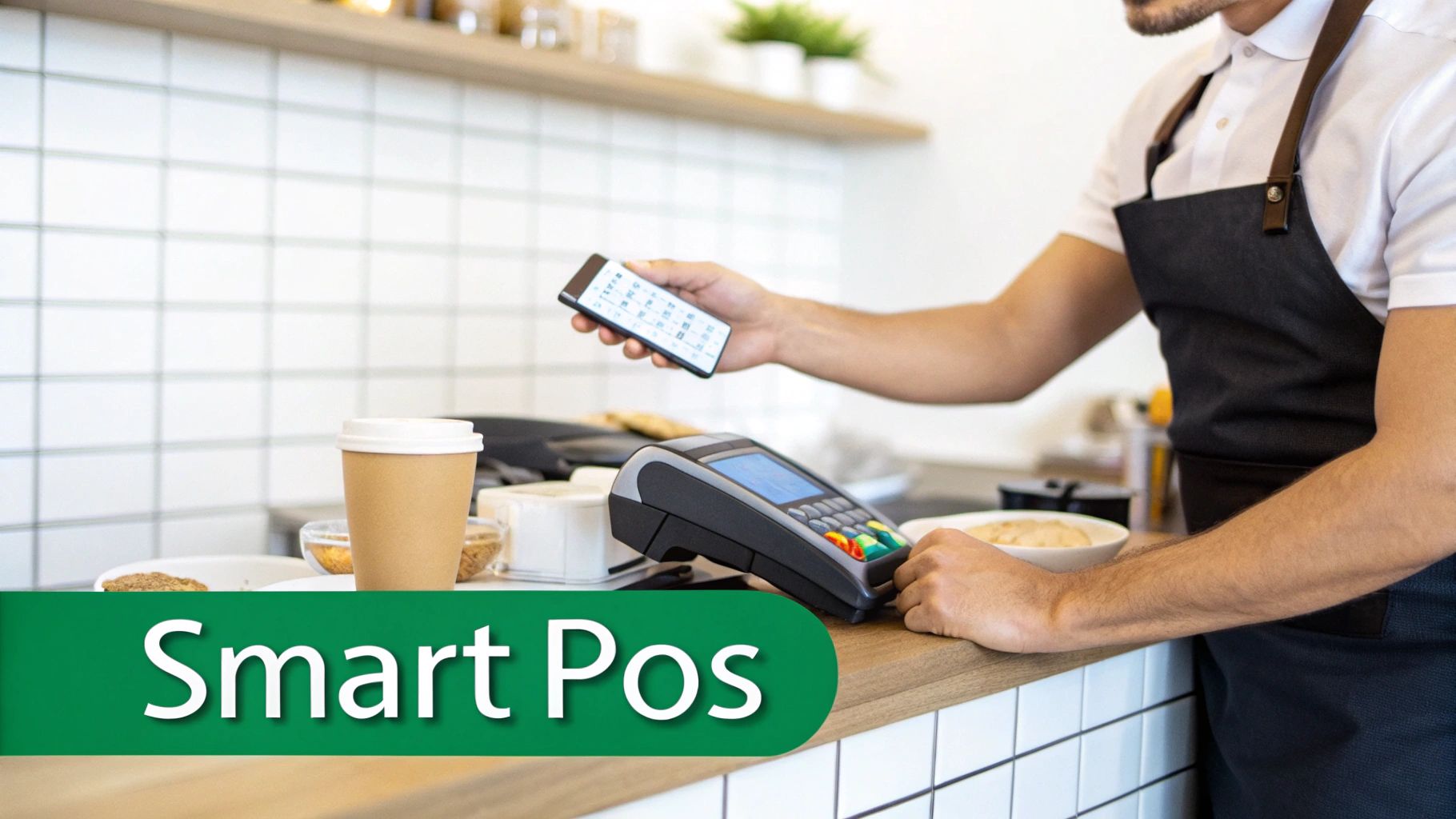
While operational tweaks and staff training are huge parts of the puzzle, technology is what really kicks your table turnover rate into high gear. Think of your restaurant POS system as the central command for your entire operation. A good one isn't just a cash register anymore; it's the engine that sets the pace for your service.
The goal is to find tech that smooths out the entire guest experience, from the moment they walk in to the second they pay. Modern systems do this by zeroing in on the most common service bottlenecks and turning those wasted minutes into real revenue.
Core POS Features That Speed Up Service
Not all POS systems are built the same, especially when you're focused on speed. To make a real difference in your turnover, you need a platform with tools designed for a fast-paced dining room.
-
Handheld Mobile POS Devices: This is the single biggest game-changer. When you give servers mobile units for tableside ordering and payment, you eliminate all those trips back and forth to a stationary terminal. Orders get to the kitchen instantly, and checks can be settled on the spot. You can easily shave precious minutes off every single table’s dining time.
-
Integrated Waitlist Management: A smart waitlist system handles guest communication for you, sending texts when tables are ready. This clears up congestion at the host stand and guarantees that tables are filled the moment they open up, cutting down on the time they sit empty.
-
Kitchen Display Systems (KDS): A KDS replaces messy paper tickets with a clear, digital screen. It organizes orders for your kitchen staff and gives them real-time data on ticket times. This helps your back-of-house team prioritize and keeps the whole service flowing, which means food gets out faster and tables turn quicker.
Why TackOn Table Is the Smart Choice for Growing Restaurants
If you're running a growing restaurant, café, or food truck, choosing the right POS often feels like a tough choice between capability and cost. Big-name systems can be powerful, but they often come with steep price tags, confusing contracts, and a bunch of features you’ll never actually use. We built TackOn Table to be the smarter alternative.
We believe every restaurant deserves technology that helps the bottom line without breaking the bank. TackOn Table gives you the essential tools you need to master your restaurant table turnover rate, all in an affordable, all-in-one platform that’s incredibly easy to use.
Our system brings together mobile POS capabilities, a super easy setup, and powerful multi-location control in one simple package. You get all the features you need to boost turnover—from tableside payments to real-time analytics—at a fraction of what our competitors charge. We focus on being adaptable and straightforward, so you can spend less time fighting with software and more time taking care of your guests. To see how we stack up, you can learn more about how TackOn Table compares to Clover and Square.
Ready to see how the right technology can unlock your restaurant's true potential? Book a demo to see TackOn Table in action or start your free trial today and discover the difference for yourself.
{ " "@type": "FAQPage", "mainEntity": [ } Common Questions About Table Turnover
Got a few more questions? You're not alone. Let's tackle some of the most common things we hear from restaurant owners about mastering table turnover.
{ " "@type": "Question", "name": "How Can I Get a Quick Win and Improve My Turnover Rate Fast?", "acceptedAnswer": { "@type": "Answer", "text": "If you're looking for the biggest impact in the shortest amount of time, look at your payment process. Switching to a mobile POS system for tableside ordering and payment is a game-changer. It cuts out all the time servers waste walking to and from a fixed terminal, easily shaving minutes off every single table's time. A solution like TackOn Table is built for exactly this kind of quick efficiency gain." } } How Can I Get a Quick Win and Improve My Turnover Rate Fast?
If you're looking for the biggest impact in the shortest amount of time, look at your payment process. Switching to a mobile POS system for tableside ordering and payment is a game-changer. It cuts out all the time servers waste walking to and from a fixed terminal, easily shaving minutes off every single table's time. A solution like TackOn Table is built for exactly this kind of quick efficiency gain.
{ " "@type": "Question", "name": "Does Turning Tables Faster Mean I Have to Rush My Guests?", "acceptedAnswer": { "@type": "Answer", "text": "Not at all. In fact, that's the last thing you want to do. The whole point is to make your operation more efficient, not to make your guests feel like they're on a timer. Think of it as eliminating dead time—the minutes spent waiting for a server, waiting to pay the bill, or waiting for a cleared table. With smart systems and a well-trained team (perhaps using a solid Toast vs Clover alternative), you'll naturally speed things up behind the scenes without ever making a customer feel hurried." } } Does Turning Tables Faster Mean I Have to Rush My Guests?
Not at all. In fact, that's the last thing you want to do. The whole point is to make your operation more efficient, not to make your guests feel like they're on a timer. Think of it as eliminating dead time—the minutes spent waiting for a server, waiting to pay the bill, or waiting for a cleared table. With smart systems and a well-trained team (perhaps using a solid Toast vs Clover alternative), you'll naturally speed things up behind the scenes without ever making a customer feel hurried.
{ " "@type": "Question", "name": "How Much Does My Menu's Design Really Affect Turnover?", "acceptedAnswer": { "@type": "Answer", "text": "More than you might think. A confusing or overwhelming menu leads to indecision, which means your server is tied up at the table longer, answering questions and waiting for a choice. A clean, well-organized menu that highlights popular dishes or items that are quick to plate helps guide customers to a decision faster. That simple change gets the order into the kitchen sooner and keeps the whole process moving smoothly." } } How Much Does My Menu's Design Really Affect Turnover?
More than you might think. A confusing or overwhelming menu leads to indecision, which means your server is tied up at the table longer, answering questions and waiting for a choice. A clean, well-organized menu that highlights popular dishes or items that are quick to plate helps guide customers to a decision faster. That simple change gets the order into the kitchen sooner and keeps the whole process moving smoothly.
The Big Picture: The real art is in striking that perfect balance between an efficient, profitable dining room and an unforgettable guest experience. The best operators achieve this by using better technology and smarter systems, not by pushing customers out the door.
{ " "@type": "Question", "name": "Is It Possible for My Table Turnover Rate to Be Too High?", "acceptedAnswer": { "@type": "Answer", "text": "Absolutely. A high turnover rate is great for revenue, but if it comes at the cost of your restaurant's vibe and reputation, it's a problem. If guests feel like they're being rushed through a factory line, they won't come back. This is especially critical for fine dining restaurants where the experience is the main event. The goal isn't just a high number; it's finding the optimal rate for your specific concept that keeps both your accountant and your customers happy." } } ] } Is It Possible for My Table Turnover Rate to Be Too High?
Absolutely. A high turnover rate is great for revenue, but if it comes at the cost of your restaurant's vibe and reputation, it's a problem. If guests feel like they're being rushed through a factory line, they won't come back. This is especially critical for fine dining restaurants where the experience is the main event. The goal isn't just a high number; it's finding the optimal rate for your specific concept that keeps both your accountant and your customers happy.
Ready to find your restaurant's perfect rhythm and stop leaving money on the table? TackOn Table provides the powerful, intuitive tools you need to optimize your turnover and boost your bottom line.
Start Your Free Trial or Book a Demo to see it in action.